The Role of Hiding Spots in Fish Health and Behavior: Why Every Aquarium Needs Them
Why Hiding Spots Are Essential, Not Optional
Hiding spots are a biological necessity for fish, not a decorative afterthought. In the wild, every fish species evolved alongside predators, competitors, and environmental stressors — and the ability to retreat to a safe refuge is hardwired into their survival instincts.
When you set up a bare aquarium with nothing but open water, you're essentially asking your fish to live in a state of constant exposure. Even in a closed tank with no actual predators, the absence of shelter triggers the same stress responses fish would experience in the wild. Over time, that chronic stress degrades health, suppresses immune function, and shortens lifespan.
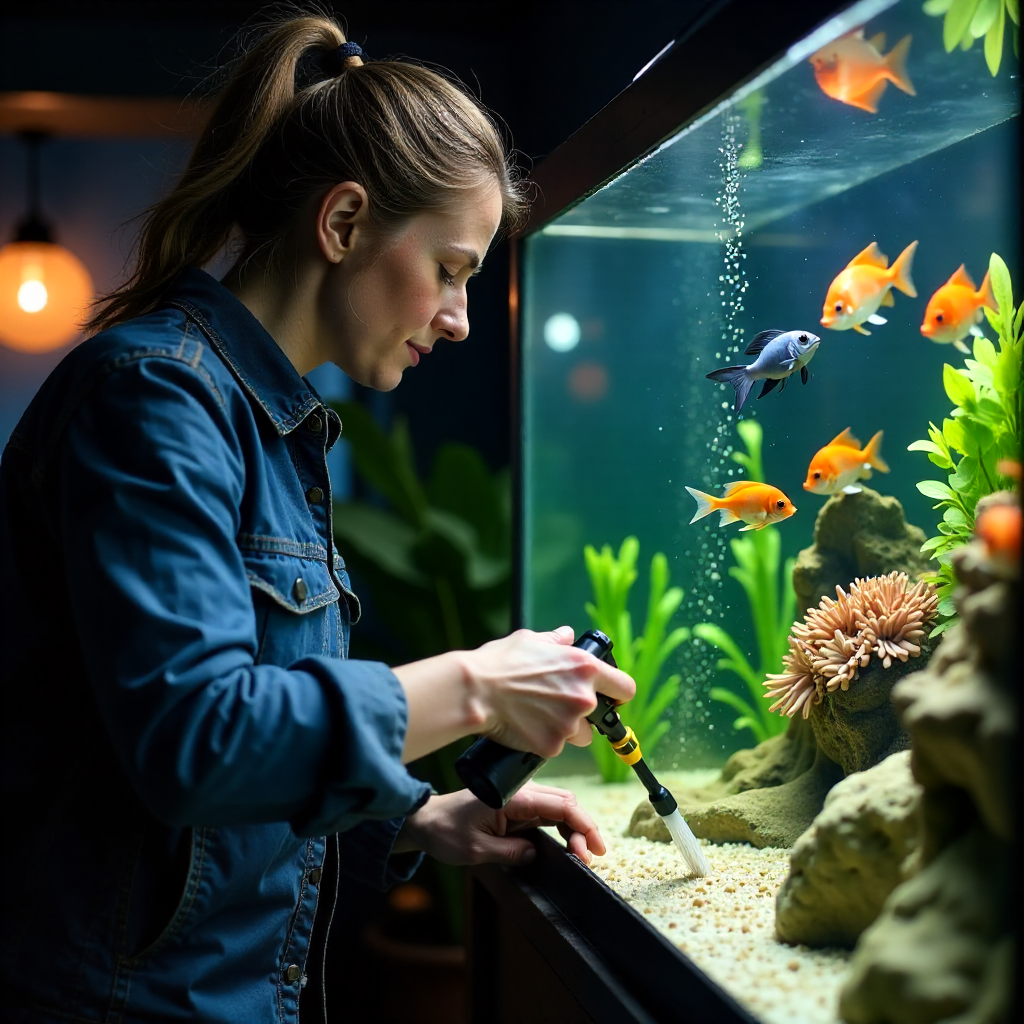
A well-designed tank environment that includes caves, plants, and driftwood doesn't just look more natural — it fundamentally changes how your fish feel and behave. The difference between a bare tank and a shelter-rich aquascape is often visible within hours of rearranging the decor. Fish become more active, more confident, and more willing to explore the open areas of the tank when they know a safe retreat is nearby.
How Hiding Spots Reduce Stress and Improve Fish Health
Shelter availability directly lowers stress hormones in fish, which translates into stronger immune systems, better color, and more natural feeding behavior. Cortisol-equivalent compounds in fish spike when they feel exposed, and sustained elevated stress hormones suppress the immune system in ways that make fish susceptible to common diseases like ich, fin rot, and bacterial infections.
Studies on cichlids and other territorial species show that fish with access to refuges spend less time in defensive postures and more time foraging. The behavioral shift is measurable: stress reduction through shelter access leads to faster growth rates in juveniles and improved recovery times after illness in adults.
Practically speaking, if you notice your fish hiding in a corner, pressing against the glass, or losing color, the tank may lack adequate shelter — not just in quantity, but in placement. A single cave at one end of a 60-gallon tank doesn't help a fish on the opposite side feel secure.
Shy species like kuhli loaches, bristlenose plecos, and many catfish spend daylight hours almost entirely in hiding. For these fish, the absence of refuges isn't a minor inconvenience — it's a chronic stressor that will eventually manifest as disease or premature death.
Managing Aggression and Territorial Behavior with Shelter
Hiding spots are one of the most effective tools for managing fish aggression and territorial behavior in community tanks. When dominant fish can't see subordinate ones constantly, the intensity of chasing and nipping drops significantly.
In cichlid tanks especially, rockwork and caves serve a dual function: they give dominant fish a territory to defend, which actually reduces roaming aggression, while simultaneously offering weaker fish an escape route. Without visual barriers, a dominant male may patrol the entire tank relentlessly, preventing other fish from feeding or resting.
The principle works across species. In a tank with multiple betta fish or aggressive gouramis, breaking sightlines with dense planting or tall ornaments can reduce confrontations by 50-70%. The fish aren't less aggressive by nature — they simply can't maintain constant visual contact with rivals.
For community tanks mixing schooling fish with solitary or semi-aggressive species, the layout of hiding spots also establishes a social hierarchy that fish can navigate without constant fighting. Each group finds its zone, and the tank settles into a functional, lower-stress equilibrium.
The Role of Hiding Spots in Breeding and Spawning
Many fish species will not breed without access to a sheltered spawning site. Caves, dense plant clusters, and flat rocks under overhangs all trigger natural spawning behavior that open water simply cannot replicate.
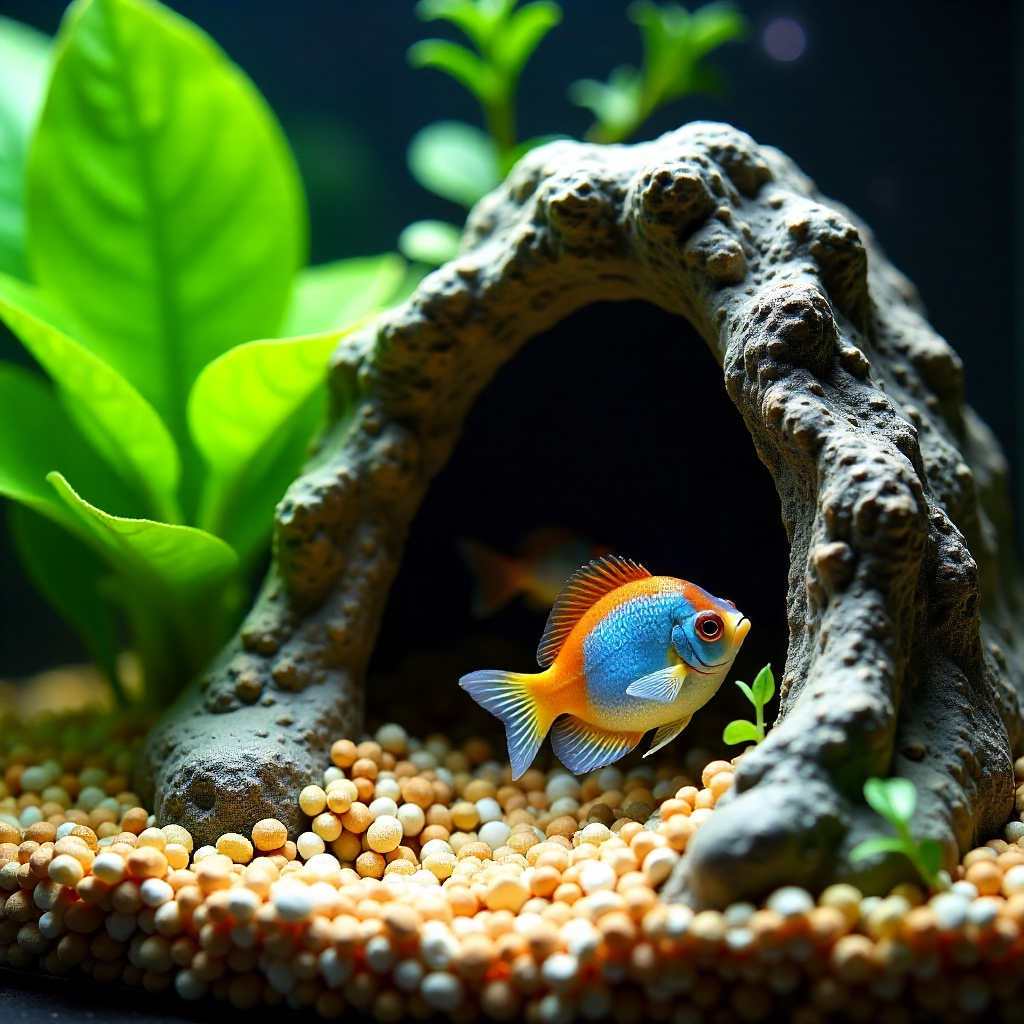
Cave-spawning cichlids like Apistogramma species and rams require enclosed spaces to feel secure enough to lay eggs. The female selects a cave, deposits eggs inside, and both parents guard the entrance. Without a suitable cave, these fish may show courtship behavior but never complete the spawning cycle.
Egg scatterers like tetras and danios use fine-leaved plants as spawning substrate, while mouthbrooders benefit from sheltered areas where they can retreat with fry. Even livebearers like guppies and mollies need dense vegetation where females can give birth away from other fish — otherwise, fry survival rates drop sharply due to predation from tankmates.
If breeding is a goal, providing species-appropriate hiding spots isn't optional. It's the trigger that initiates the entire reproductive sequence.
Best Types of Aquarium Decor to Use as Hiding Spots
The right decor depends on your fish species, tank size, and aesthetic preferences — but several categories consistently perform well as functional refuges.
Caves and Ceramic Ornaments
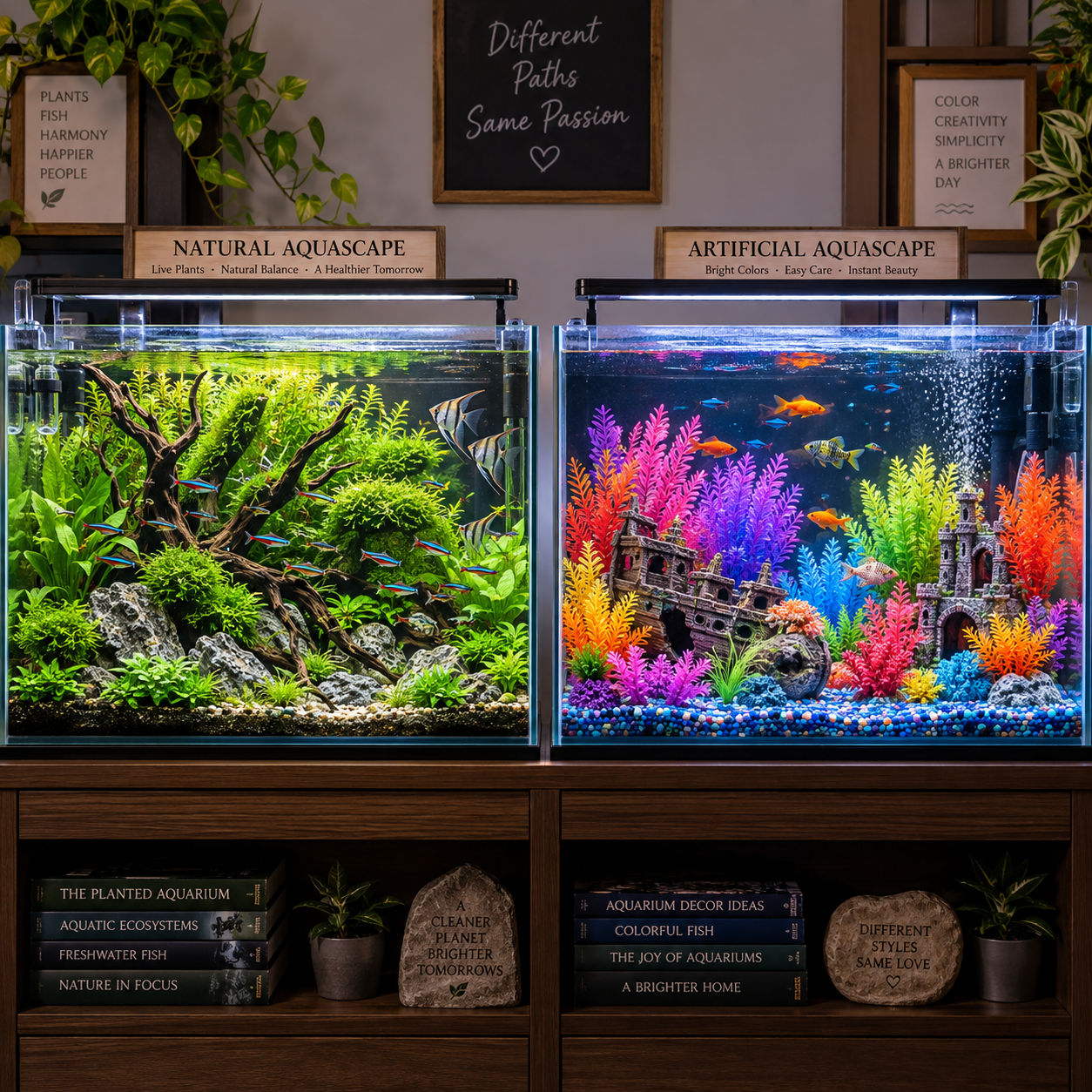
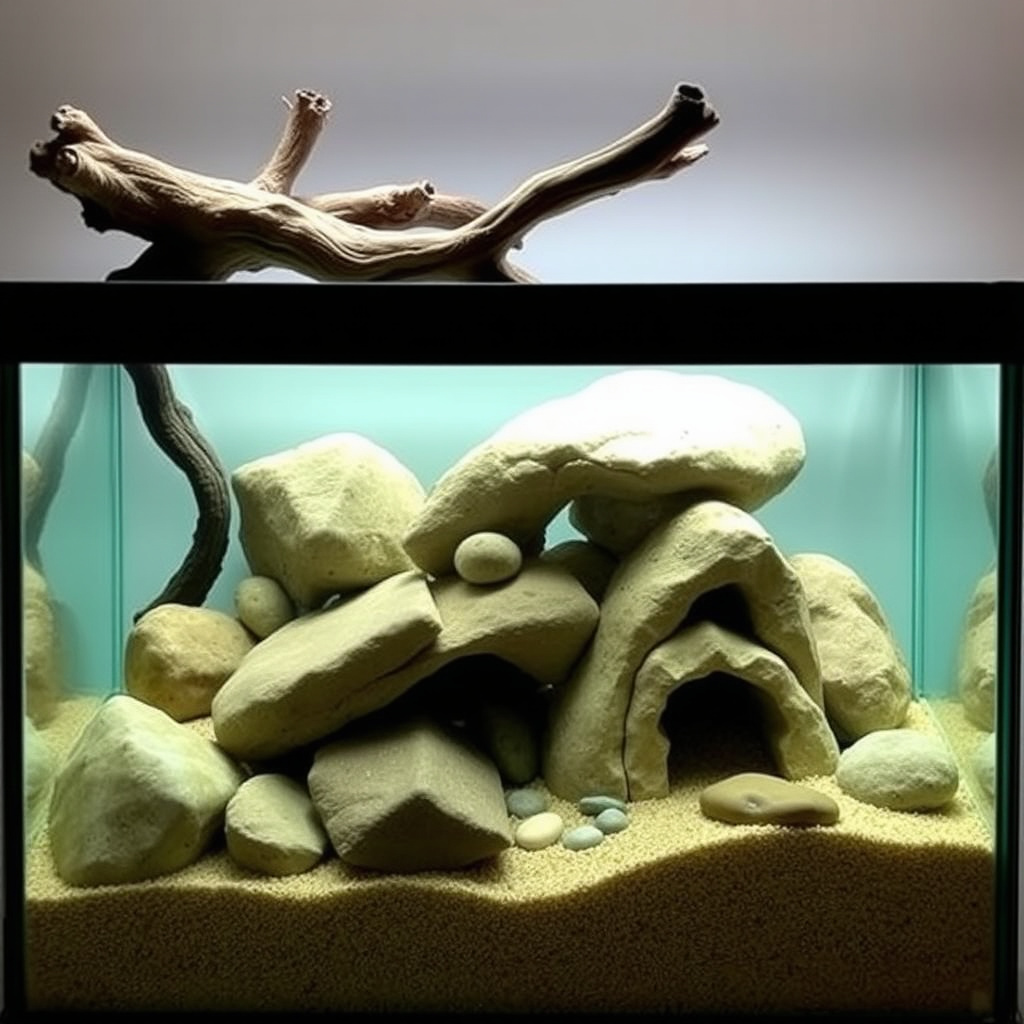
Aquarium caves are purpose-built for shelter and spawning. They come in natural stone finishes, terracotta, or resin, and are sized for everything from small tetras to large cichlids. The advantage is predictability — you know exactly where fish will retreat. The trade-off is that some ornaments look artificial, which may not suit a natural aquascape.
Driftwood and Rockwork
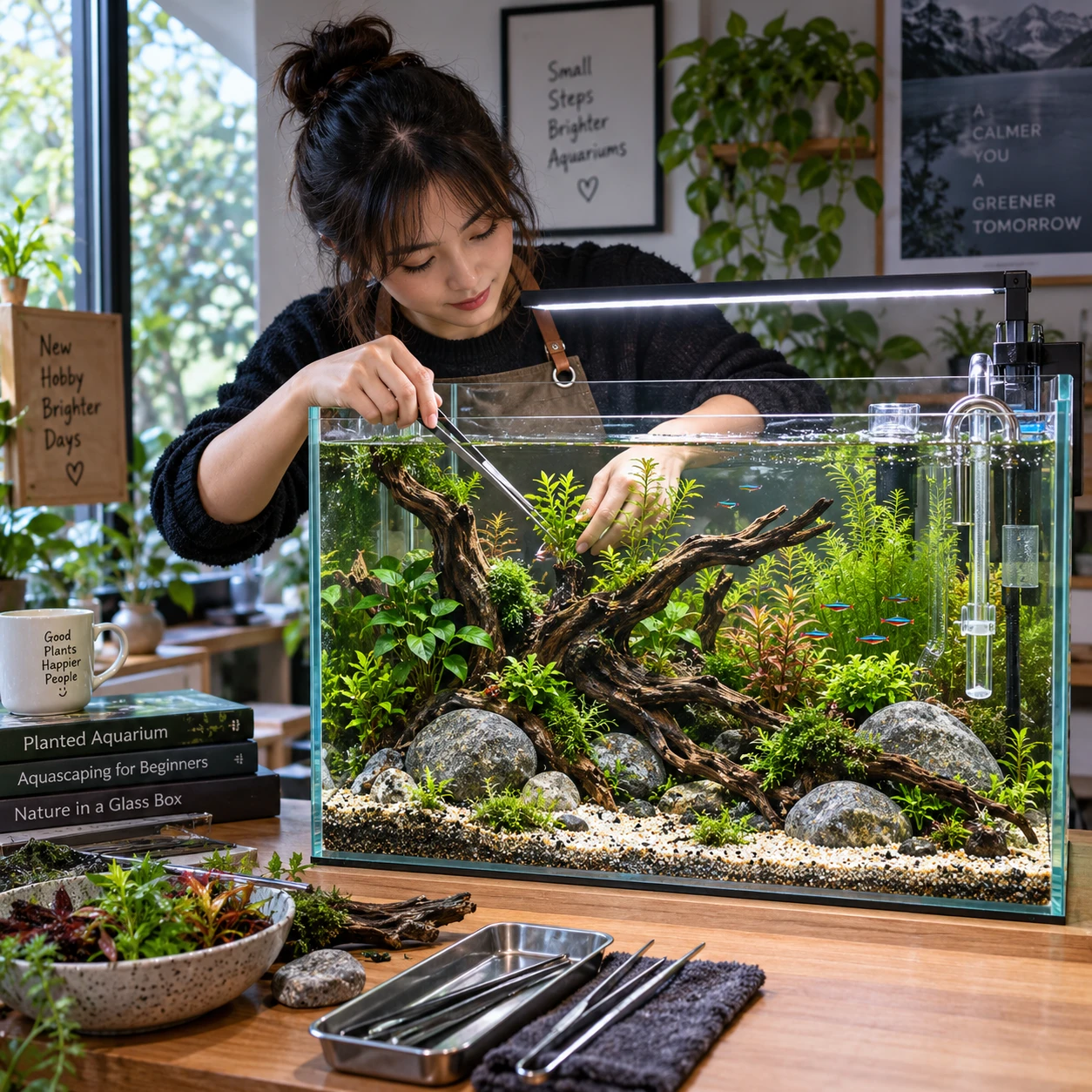
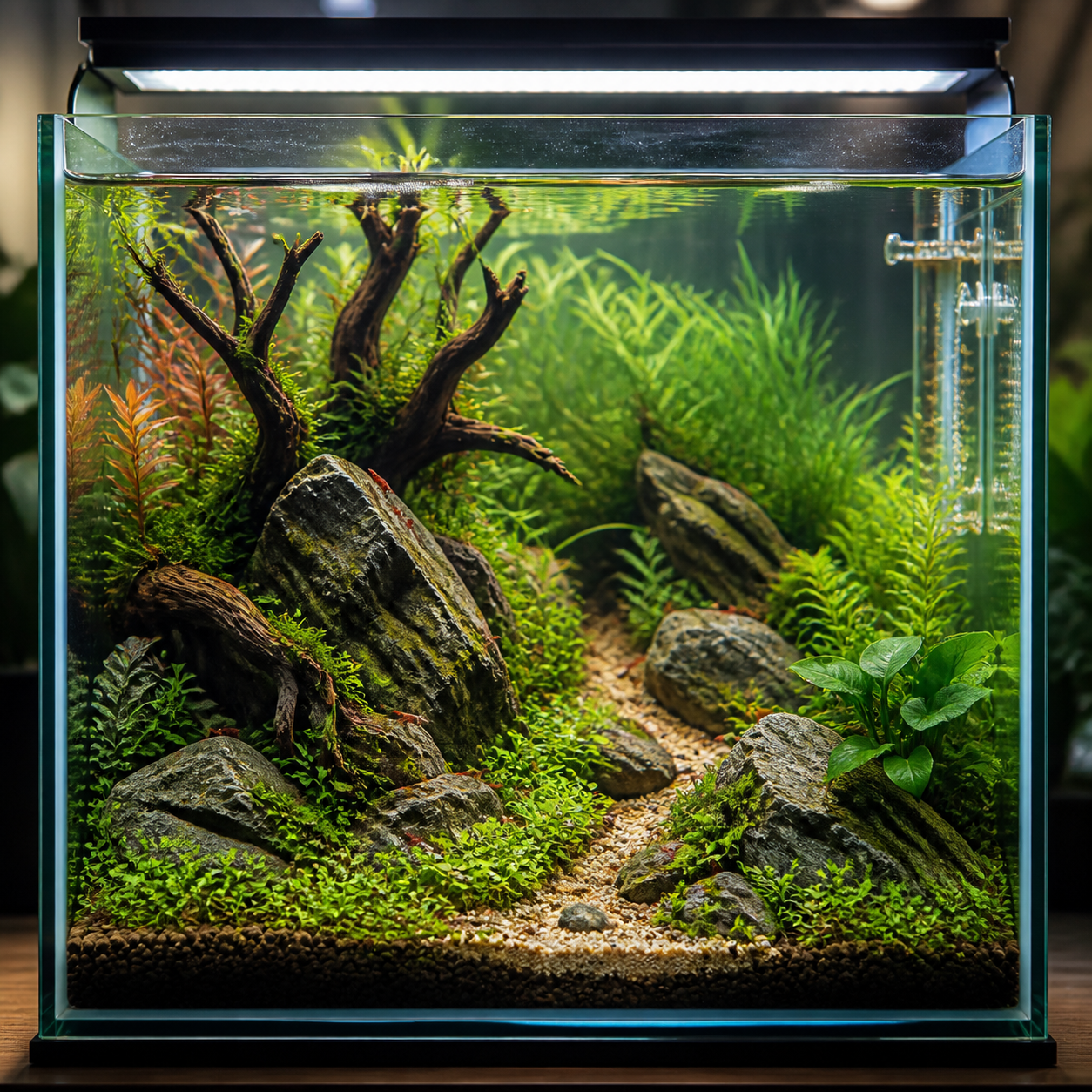
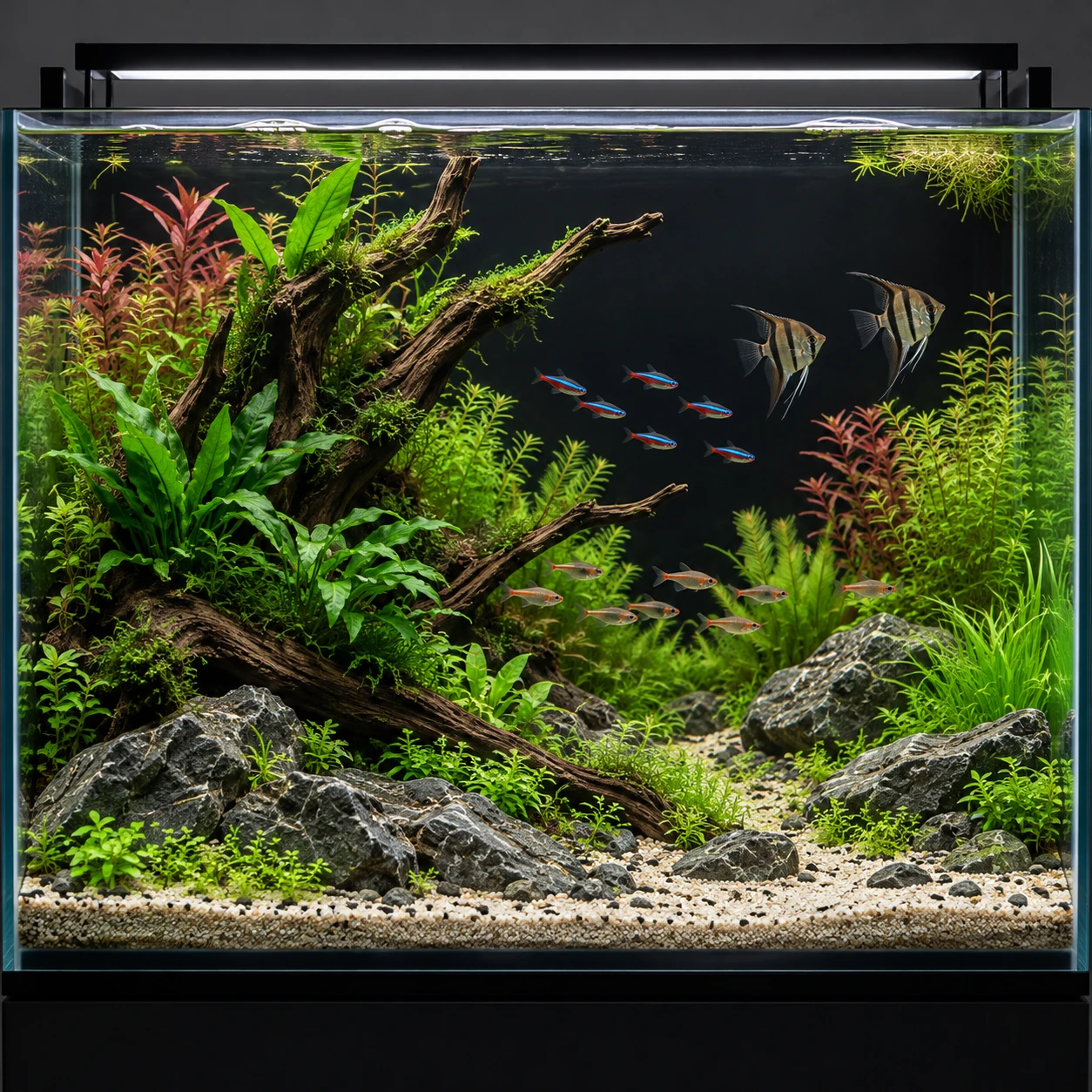
Driftwood creates complex, multi-level hiding opportunities that look completely natural. Branchy pieces create canopies; larger root structures form tunnels and crevices. Rockwork stacked in stable formations achieves a similar effect and is particularly suited to African cichlid tanks. Both materials also provide surface area for beneficial bacteria, which supports water quality.
Live and Artificial Aquatic Plants
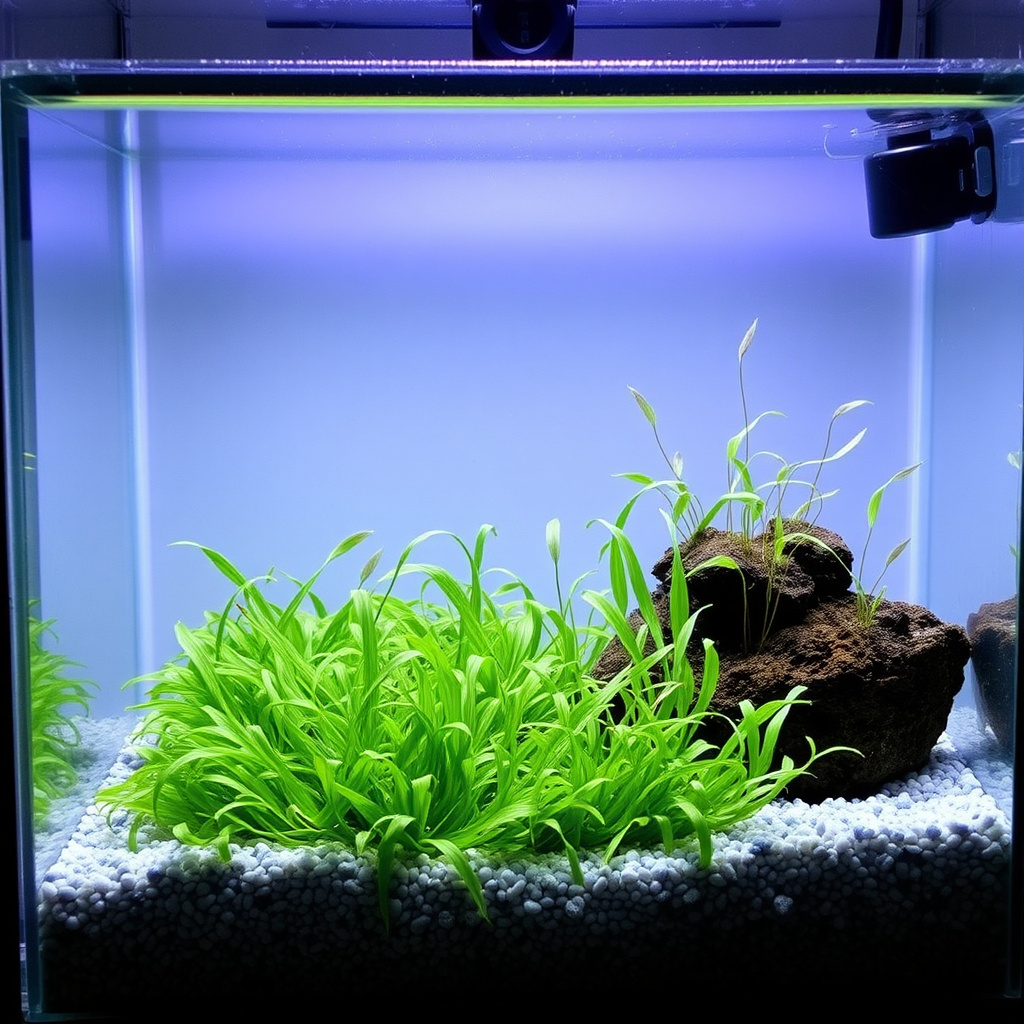
Dense aquatic plants — whether live or high-quality artificial — offer soft, flexible cover that many fish prefer over hard structures. Java fern, Amazon swords, and hornwort create hiding zones without blocking water flow. Live plants have the added benefit of oxygenating the water and absorbing nitrates, making them a functional choice on multiple levels.
Which Fish Species Benefit Most from Hiding Places
While all fish benefit from some level of shelter, certain species have particularly strong needs that should shape your tank design from the start.
- Bottom-dwelling catfish and loaches (corydoras, kuhli loaches, plecos) are nocturnal or crepuscular and spend most daylight hours hidden. They need low, enclosed spaces — caves, PVC pipes, or dense substrate planting.
- Cichlids — especially dwarf cichlids and African rift lake species — use caves as territorial anchors and spawning sites. A cichlid tank without caves is a recipe for unmanageable aggression.
- Shy or reclusive species like ghost knives, rope fish, and bichirs rarely emerge in open tanks and will become chronically stressed without adequate cover.
- Schooling fish like tetras and rasboras benefit from plant cover at the tank edges, which gives them a safe zone to retreat to when startled — even if they spend most of their time in open water.
- Aggressive species like bettas and some barbs need visual barriers between individuals to prevent constant confrontation in community settings.
How to Arrange Hiding Spots for a Balanced, Healthy Aquarium
Effective shelter placement balances coverage with open swimming space and visual clarity. The goal is a tank where fish feel secure without the aquascape becoming a cluttered maze.
A practical starting framework: divide the tank into thirds. The back third holds taller plants, driftwood, or stacked rockwork — this is the primary refuge zone. The middle third contains mid-height decor with a few open paths between structures. The front third stays relatively open for swimming and viewing. This layout gives fish retreat options at every depth while preserving the visual appeal of the aquascape.
A few specific tips worth applying immediately:
- Place at least one hiding spot per fish in species that are solitary or territorial. For a tank with three cichlids, three distinct cave areas prevent monopolization.
- Avoid clustering all shelter in one corner. Distributed refuges mean fish don't have to cross open territory to reach safety.
- Leave clearance around filter intakes and heaters — dense decor too close to equipment can restrict flow or trap heat.
- For bottom-dwellers, prioritize horizontal structures (flat caves, hollow logs) over vertical ones.
One common mistake: adding too many large ornaments that fragment the tank into disconnected pockets with no clear swimming lanes. Fish need both shelter and space to move. The best aquascapes feel layered and intentional, not packed.
Frequently Asked Questions
Do all fish need hiding spots, or only certain species?
All fish benefit from some form of shelter, but the need varies by species. Bottom-dwellers, nocturnal fish, and shy or territorial species have the strongest requirements. Even active schooling fish use plant cover as a stress buffer when startled.
Can too many hiding spots be bad for a fish tank?
Yes, if hiding spots reduce swimming space below what fish need or block water circulation. Over-decorated tanks can also make it difficult to observe fish and spot early signs of illness. Aim for coverage without crowding.
What is the best aquarium decor to use as a hiding spot?
There's no single best option — it depends on your fish. Ceramic caves work well for cichlids and spawning species; driftwood suits most community tanks; dense planting benefits schooling fish and livebearers. A combination of types usually provides the most functional coverage.
How do I know if my fish is stressed due to lack of shelter?
Watch for hiding in corners or behind equipment, faded coloration, reduced appetite, erratic swimming, or persistent fin damage from aggression. These are common signs that a fish lacks adequate refuge in its current tank setup.
Do hiding spots affect water flow or filtration in the tank?
They can, if placed directly in front of filter outputs or intakes. Keep decor at least a few inches from filtration equipment and ensure water can circulate freely through the tank. Driftwood and open-structure rockwork typically have less impact on flow than solid ornaments placed in clusters.