The Role of Hiding Spots in Fish Health and Behavior: Why Every Aquarium Needs Them The Role of Hiding Spots in Fish Health and Behavior: Why Every Aquarium Needs Them How to Clean and Maintain Aquarium Decorations for a Healthy Tank How to Clean and Maintain Aquarium Decorations for a Healthy Tank Exploring the Rise of Winaura Kasyno: A Comprehensive Guide to Online Casino Gaming Trends in the European Union 2026 Exploring the Rise of Winaura Kasyno: A Comprehensive Guide to Online Casino Gaming Trends in the European Union 2026

Common Mistakes to Avoid When Decorating Your Tank (And How to Get It Right)

Setting up a new tank is one of the most exciting parts of the aquarium hobby. But excitement can lead to rushed decisions — and a few common decorating mistakes can leave you with a tank that looks chaotic, stresses your fish, or becomes a maintenance nightmare. The good news: most of these errors are easy to avoid once you know what to look for.

Skipping the Aquarium Background Altogether

Leaving the back glass bare is one of the most overlooked mistakes in aquarium decorating. Without a background, your tank looks unfinished, the equipment and wiring behind the glass become visible, and fish — especially timid species — can feel exposed and stressed.

An aquarium background does more than improve aesthetics. It creates a visual boundary that gives fish a sense of security, reduces reflections that can confuse or startle them, and sets the entire color palette for your aquascape. Think of it as the canvas before you paint.

Dark backgrounds (deep blue, black, slate gray) make colors pop and give the tank a sense of depth. Lighter or printed scenic backgrounds can simulate natural habitats like riverbeds or coral reefs. Whichever you choose, the background should be the first decision you make — not an afterthought.

You can explore aquarium decor principles on Wikipedia to understand how background choices interact with the overall design of a tank.

Choosing Décor That Doesn't Match Your Tank's Scale

Décor scaling is about proportion: the size of your decorations should match the dimensions of your tank. Oversized rocks or ornaments in a 10-gallon tank make the space feel cramped and can physically block swimming lanes. Tiny pebbles and miniature plants in a 75-gallon tank look lost and insignificant.

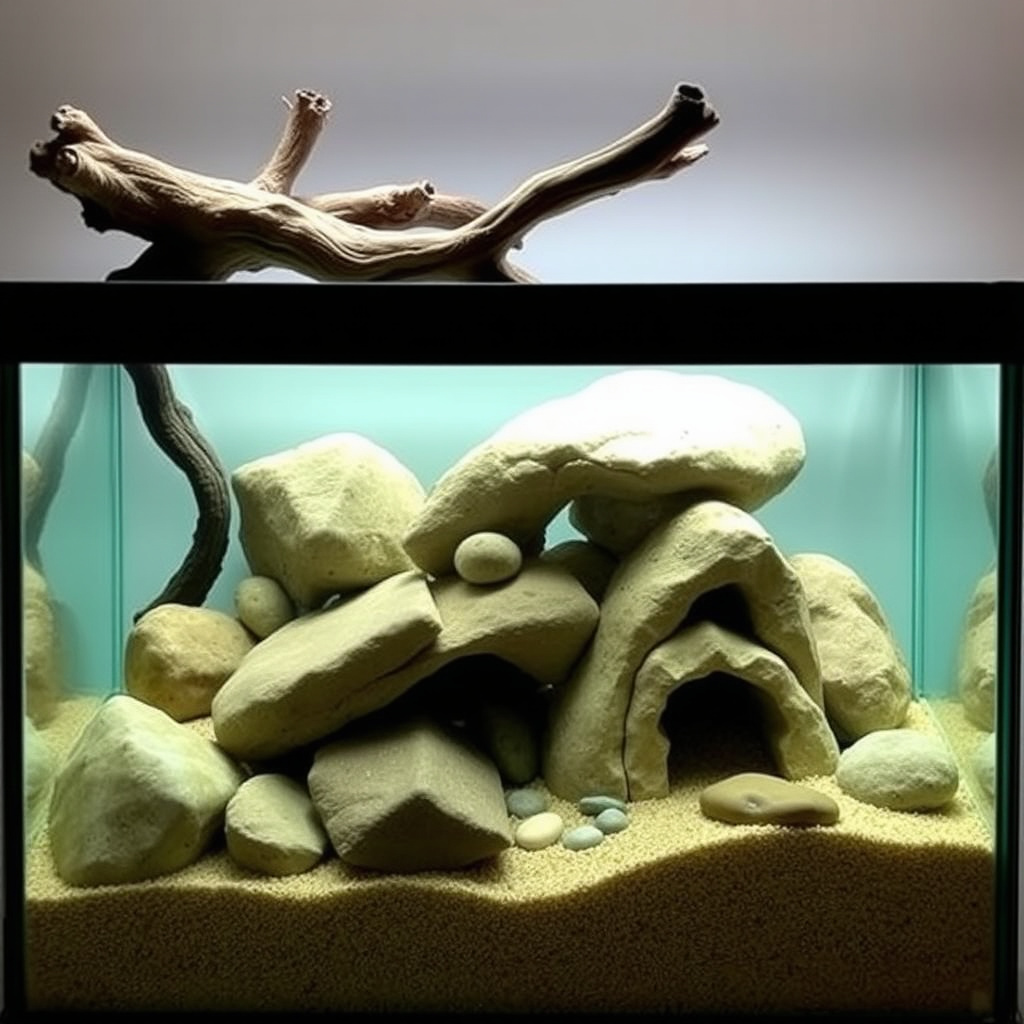
A useful rule of thumb: no single decoration should occupy more than 15–20% of your tank's footprint. In smaller tanks, opt for slender driftwood, compact rock formations, and low-profile plants. In larger setups, you have room for bold centerpiece pieces — but they still need to breathe within the layout.

Fish compatibility with décor scale matters too. Cichlids and other territorial species need clearly defined spaces, while schooling fish like tetras or rasboras need open water to move freely. Oversized décor that cuts the tank into awkward segments can disrupt natural behavior patterns.

Overcrowding the Tank with Too Many Decorations

A cluttered tank is one of the most common beginner mistakes, and it creates problems on multiple levels. Too many decorations reduce swimming space, create dead zones where water doesn't circulate properly, and make routine cleaning significantly harder.

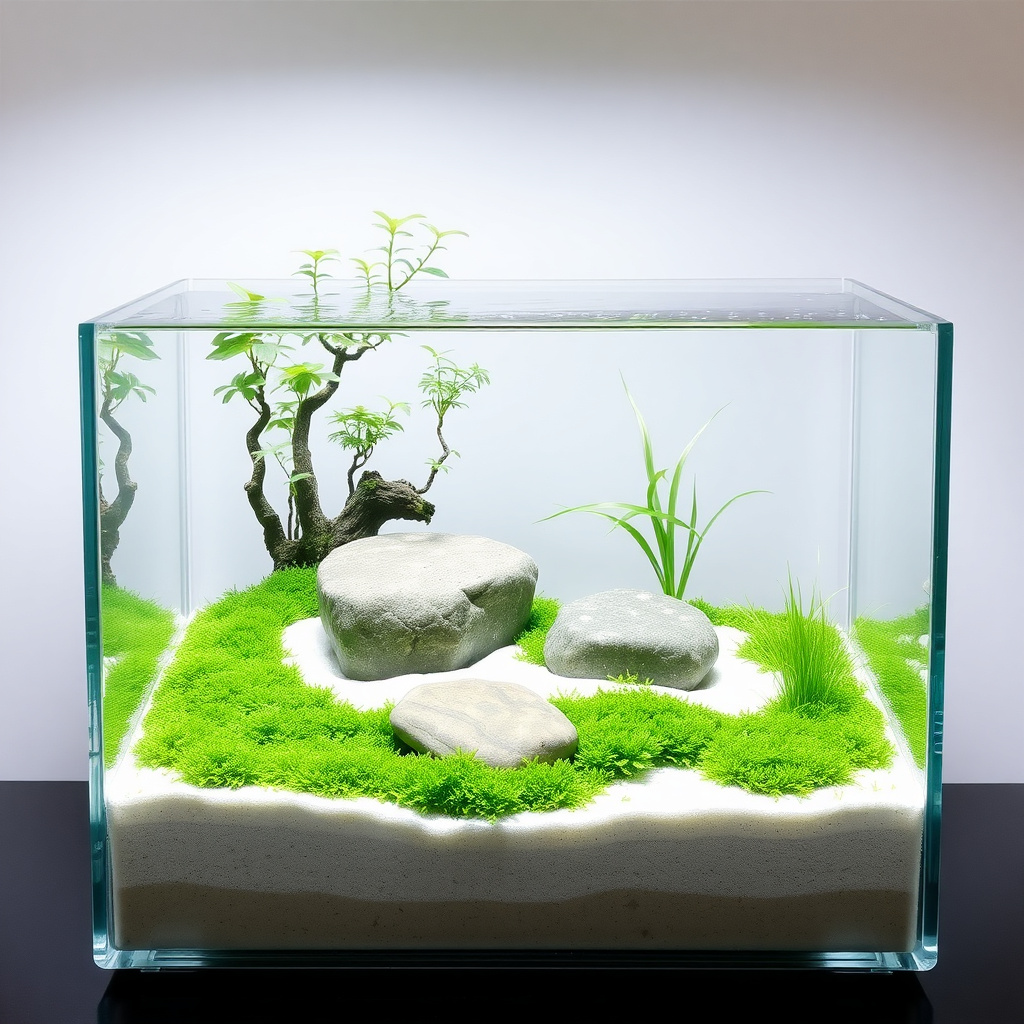
The goal of a well-designed aquascape isn't to fill every inch of space — it's to use negative space intentionally. Open areas of substrate or mid-water swimming room make the tank feel larger and give the eye a place to rest. Some of the most striking tanks are remarkably minimal.

If you're unsure whether your layout is too busy, try this test: remove one item and see if the tank looks better. If it does, keep going. A good aquascape should feel balanced, not packed. Water flow should move freely around all decorations, reaching every corner of the tank.

Ignoring Color Coordination Between Background and Décor

Mismatched colors and textures create visual chaos that undermines even the most thoughtful aquascape layout. Color contrast and cohesion are what transform a collection of decorations into a unified design.

The most effective approach is to treat your aquarium background as the anchor and build your décor palette outward from it. A dark slate background pairs naturally with earthy tones — brown driftwood, gray rock, green plants. A blue gradient background works beautifully with white sand substrate and bright-colored fish. Clashing a neon printed background with terracotta ornaments and purple gravel, on the other hand, produces a result that's hard to look at.

Consider limiting your palette to two or three dominant colors. This doesn't mean everything has to match perfectly — contrast is good — but there should be a clear visual logic to your choices. Color cohesion is what separates a deliberate aquascape from a random collection of objects dropped into water.

Forgetting the Three-Layer Rule (Foreground, Midground, Background)

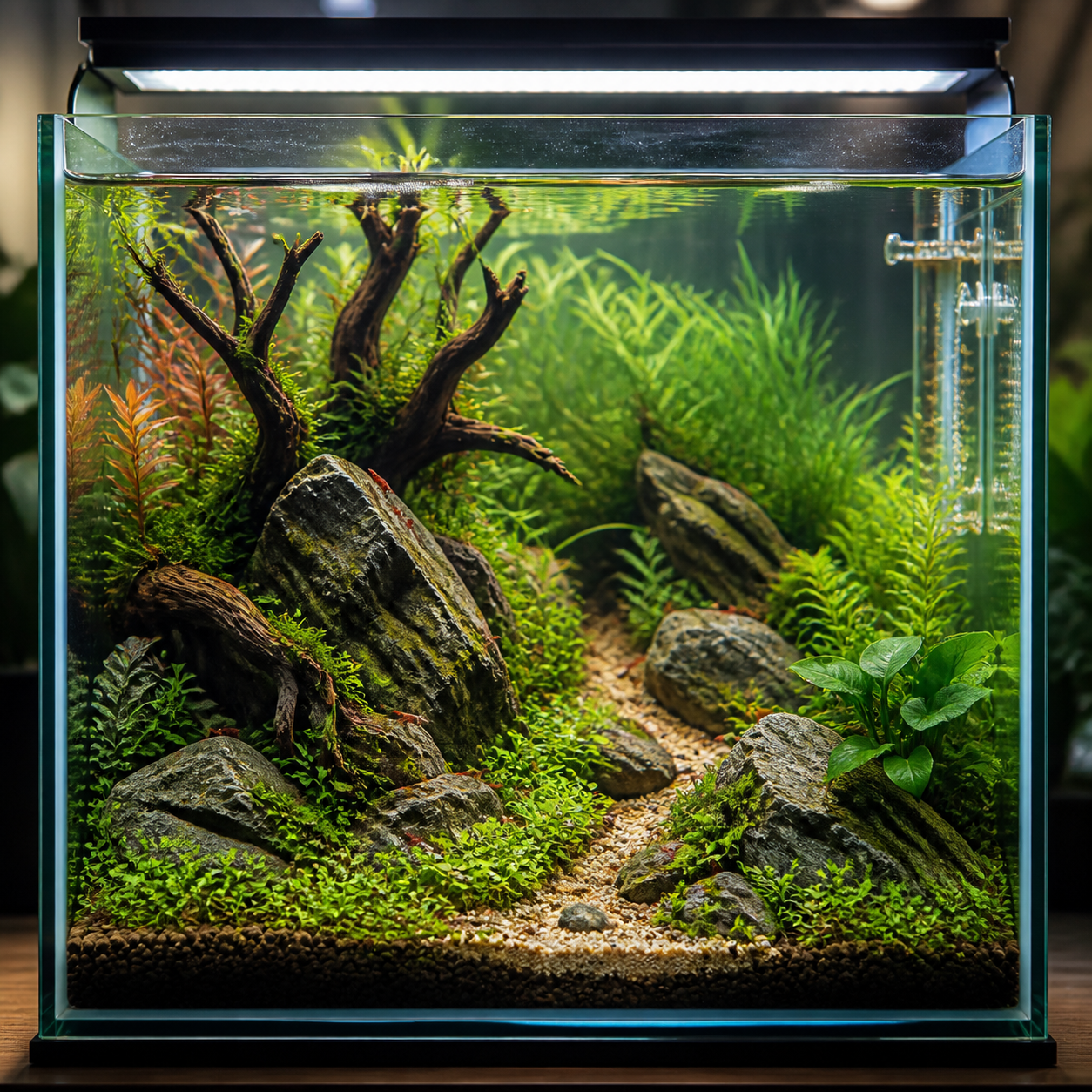
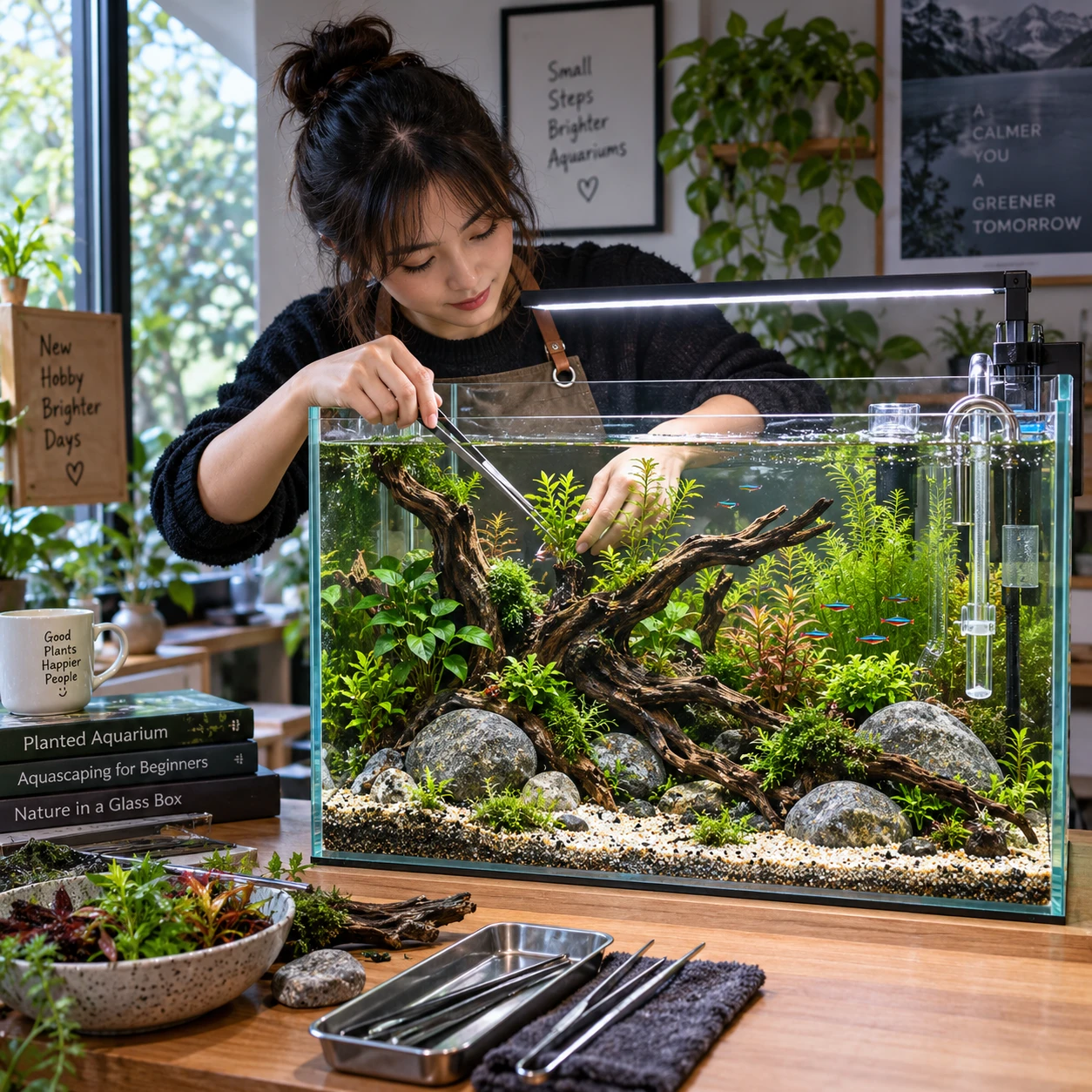
The three-layer rule is the single most effective framework for creating a natural-looking aquascape with genuine visual depth. Without it, even beautiful individual pieces tend to look flat and disorganized.

Here's how the layers work:

  • Foreground: Low-profile plants, fine sand or gravel substrate, and small smooth stones placed closest to the front glass. This layer draws the eye in and anchors the composition.
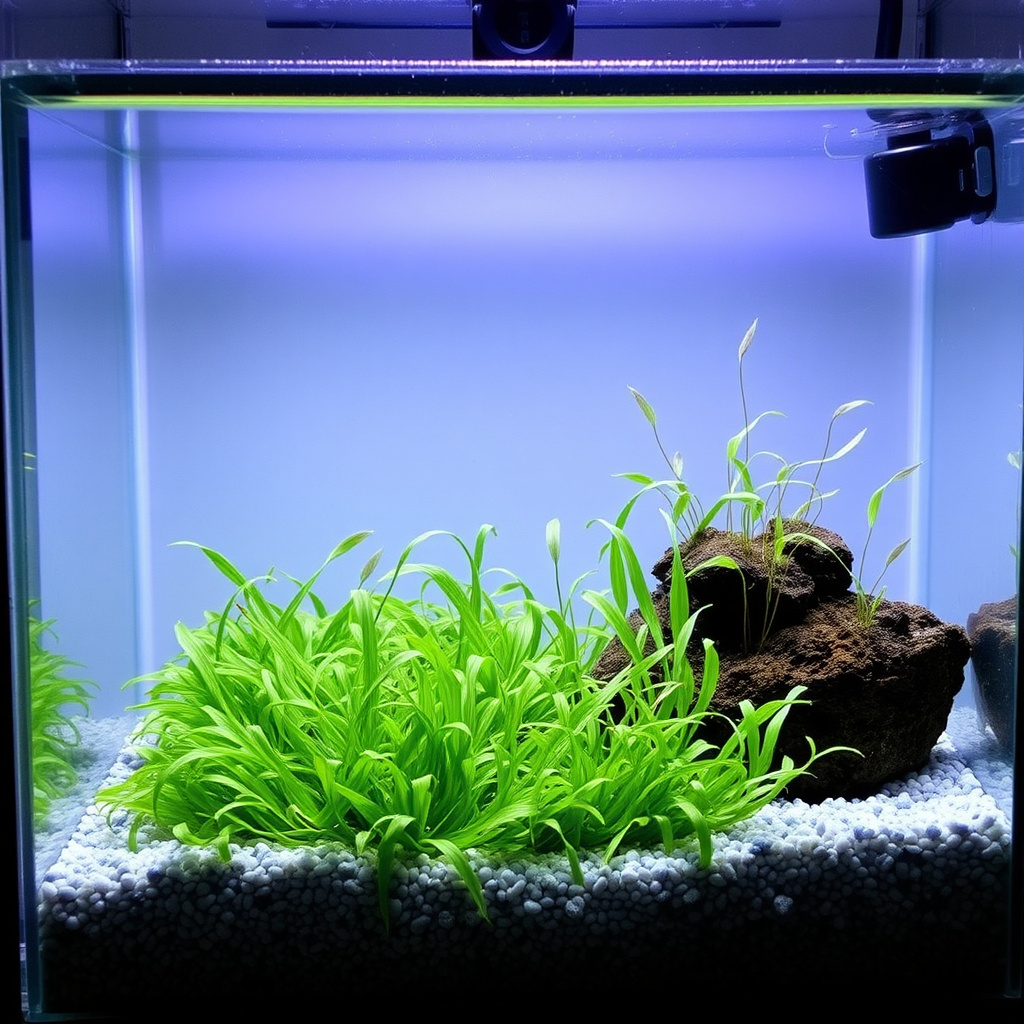
  • Midground: Medium-height plants, smaller rocks, or compact driftwood placed in the middle third of the tank. This is where most of the visual interest lives.
  • Background layer: Tall plants, larger rock formations, or dramatic driftwood positioned near the back glass and complementing the aquarium background panel behind it.

The layering principle mimics how natural underwater environments actually look — which is why it works so well. Fish also respond positively to this kind of structured environment, as it provides distinct zones for hiding, foraging, and open swimming. Think of it less as a decorating trick and more as habitat design.

Placing Decorations That Block Filtration or Equipment

Positioning décor in front of filters, heaters, or return nozzles is a practical mistake that's easy to make and slow to notice — until something goes wrong. Blocked filtration leads to poor water circulation, which creates low-oxygen pockets and allows waste to accumulate in dead zones.

Before placing any decoration, map out where your filter intake, output, and heater are located. Leave a clear radius of at least 2–3 inches around each piece of equipment. Tall plants and large rocks look great near the back corners, but not if they're pressed directly against the filter intake.

Equipment accessibility matters for long-term maintenance too. If you have to dismantle half your aquascape every time you need to adjust the heater, you'll either neglect maintenance or grow frustrated with the hobby. Build your layout so that key equipment remains reachable with minimal disruption.

Mixing Incompatible Themes or Styles

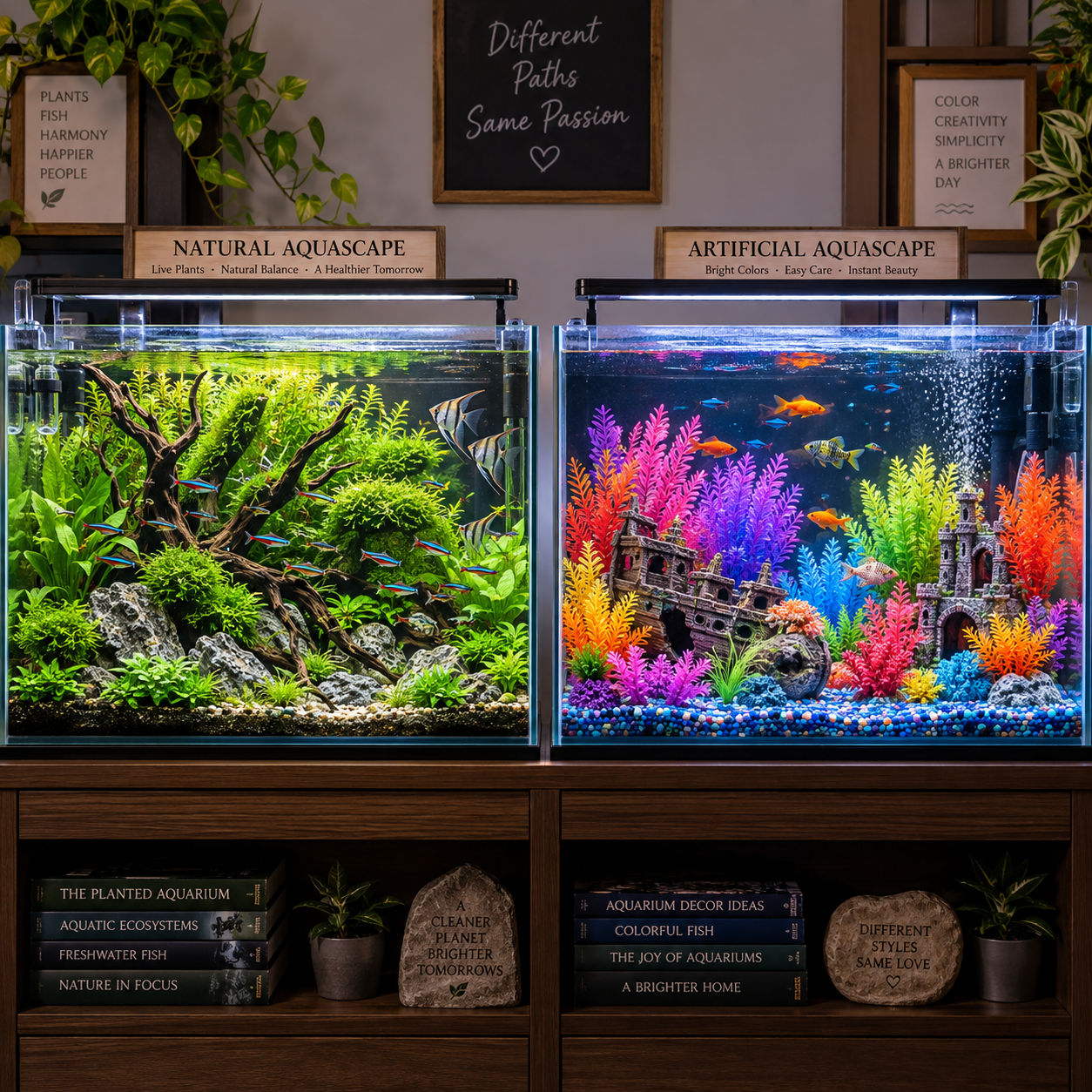
A sunken pirate ship next to a Zen rock garden next to a fluorescent coral reef ornament — it sounds extreme, but this kind of theme collision happens more often than you'd think. Mixing incompatible décor styles produces a tank that feels incoherent, regardless of how attractive each individual piece might be.

The artificial vs. natural decorations debate is real, but it's less about which type you use and more about whether they belong in the same visual world. You can absolutely mix artificial and natural elements — a silk plant next to real driftwood can look perfectly natural — as long as they share a consistent aesthetic language.

Pick a theme before you buy anything: natural biotope, minimalist Zen, planted jungle, or even a tasteful novelty theme. Then stick to it. Every piece you add should earn its place by fitting that theme, not just because it caught your eye at the store.

Frequently Asked Questions

Does the aquarium background color affect fish behavior or stress levels?

Yes, it can. Dark backgrounds tend to reduce reflections and make fish feel more secure, particularly for shy or skittish species. Light or mirrored surfaces can cause some fish to become agitated or display territorial behavior toward their own reflection.

How do I know if my tank is overcrowded with decorations?

If fish can't complete a natural swimming path without navigating around obstacles, or if you can't see clear water flow movement, the tank is likely overcrowded. A simple rule: at least 40–50% of the tank's volume should remain open water.

Can I mix artificial and natural decorations in the same tank?

Yes, as long as they share a consistent visual style. Artificial silk plants alongside real driftwood or natural stone work well. The key is thematic consistency, not material purity.

What is the safest way to attach or position a background on a fish tank?

Most aquarium backgrounds are applied to the outside of the rear glass using water or low-tack tape, which keeps them away from the water entirely. Ensure there are no air bubbles trapped underneath, as these create distracting bright spots under aquarium lighting.

How often should I rearrange or update my tank décor?

For most community tanks, major rearrangements every 6–12 months are reasonable. More frequent changes can stress fish, particularly territorial species. Small updates — swapping a plant or adding a new stone — are less disruptive and can keep the tank feeling fresh without unsettling its inhabitants.

{{HOMEPAGE_LINKS}}