The Role of Hiding Spots in Fish Health and Behavior: Why Every Aquarium Needs Them The Role of Hiding Spots in Fish Health and Behavior: Why Every Aquarium Needs Them How to Clean and Maintain Aquarium Decorations for a Healthy Tank How to Clean and Maintain Aquarium Decorations for a Healthy Tank Exploring the Rise of Winaura Kasyno: A Comprehensive Guide to Online Casino Gaming Trends in the European Union 2026 Exploring the Rise of Winaura Kasyno: A Comprehensive Guide to Online Casino Gaming Trends in the European Union 2026

LED Lighting Tips to Enhance Your Aquarium's Beauty

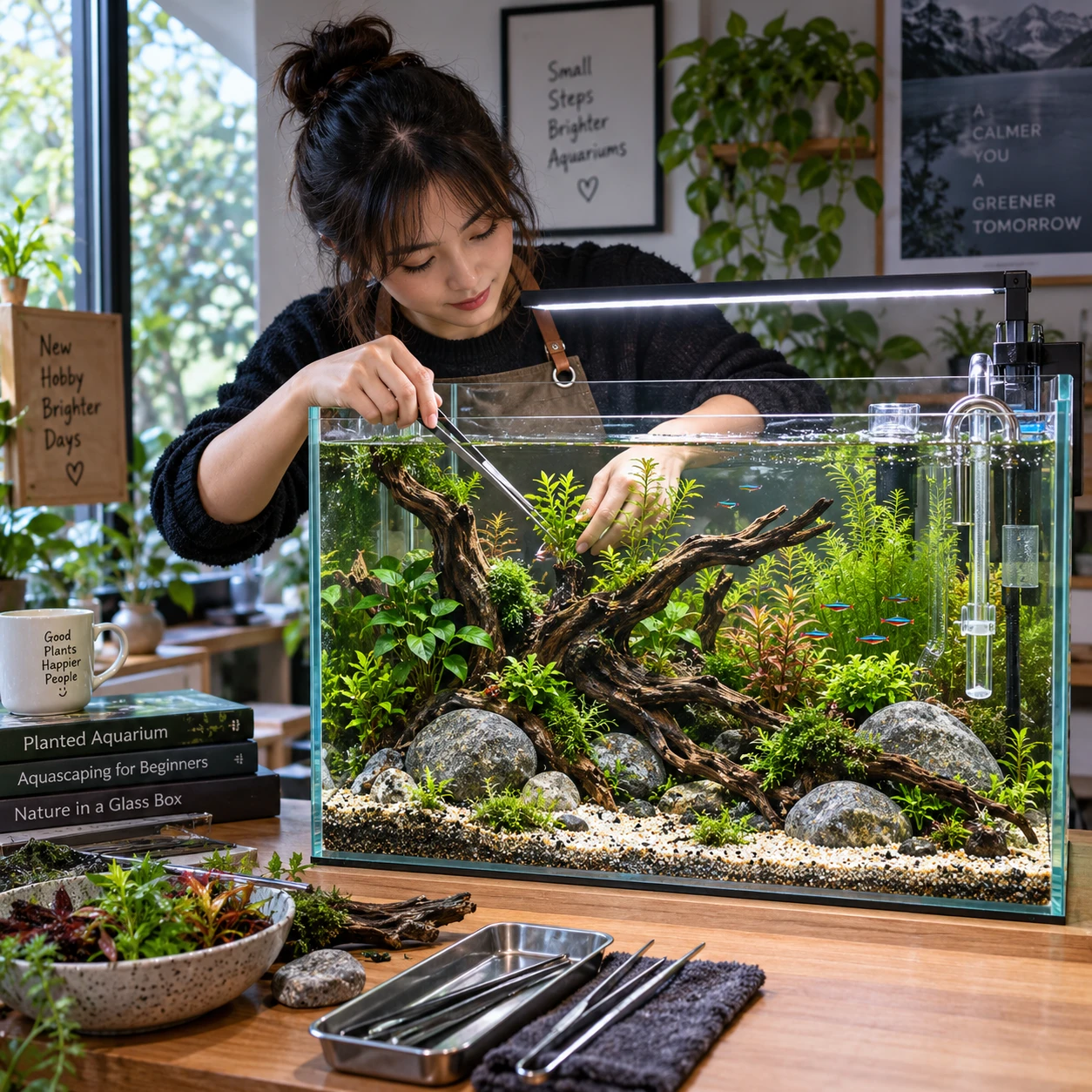
There's a moment every aquarium keeper knows — you dial in the lighting just right, and suddenly the tank transforms. The fish glow. The plants look almost electric. The water itself seems alive. That transformation rarely happens by accident. It's the result of understanding how LED aquarium lights interact with everything inside the tank, and using that knowledge intentionally.

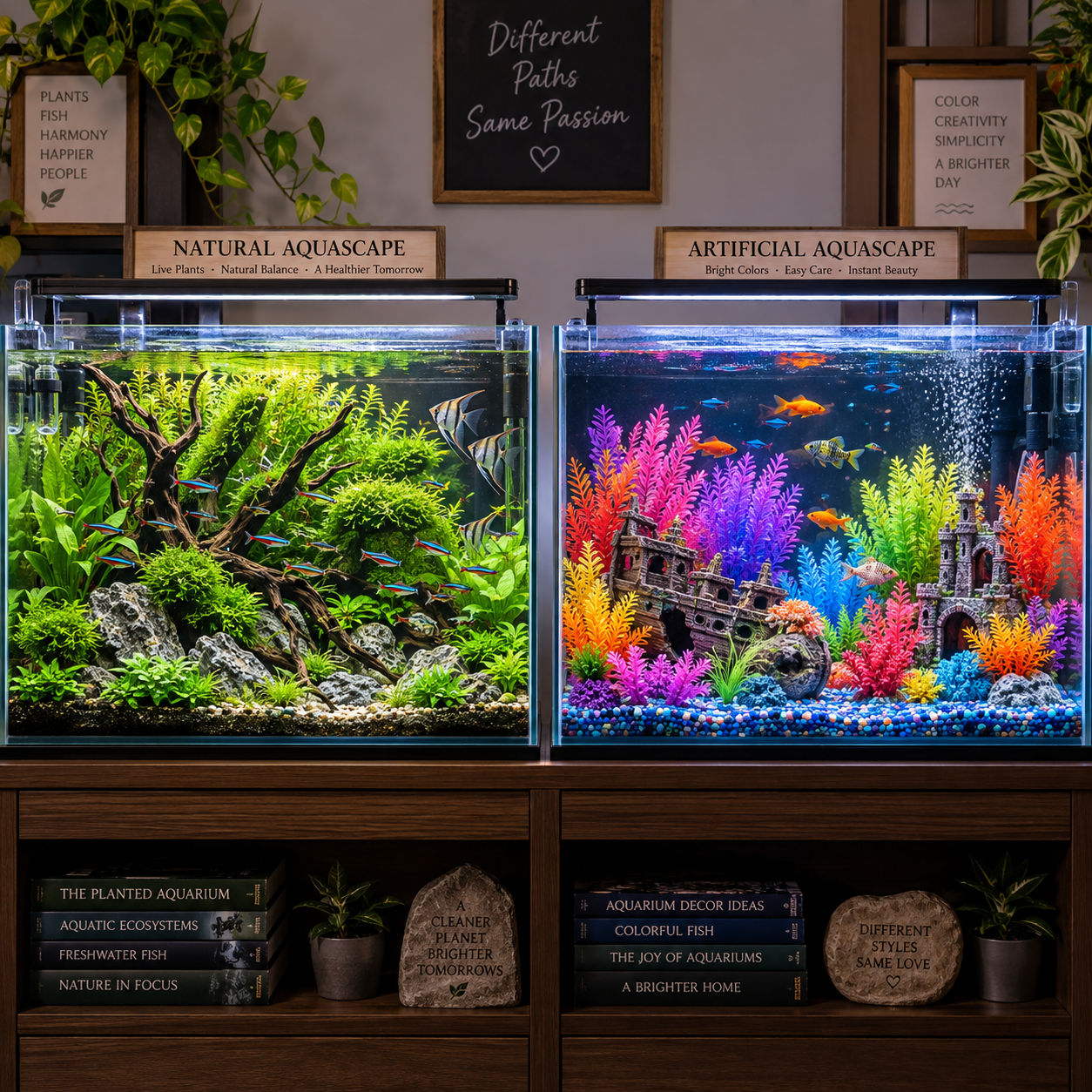
Whether you're working with a planted freshwater setup, a reef tank, or a minimalist aquascape, the tips below will help you get dramatically better visual results from your LED lighting.

Why LED Lighting Makes a Difference in Aquarium Aesthetics

LED aquarium lights outperform older fluorescent and incandescent options because they offer precise control over color, intensity, and spectrum — the three factors that most directly determine how beautiful a tank looks. Older bulbs emit fixed light profiles you can't adjust. LEDs give you a toolkit.

The visual gap is significant. A well-configured LED setup can make a mid-range aquascape look like a professional display. The same tank under outdated fluorescent tubes often looks flat, washed out, or yellowish. That's not a matter of taste — it's physics. LEDs can target specific wavelengths that make red fish pop, blue corals fluoresce, and green plants look lush rather than pale.

Beyond aesthetics, LEDs run cooler and consume less energy, which means you can run them longer without worrying about heat stress or electricity costs. For decor-focused hobbyists, that extended runtime flexibility is genuinely useful when you're crafting a lighting schedule designed for visual drama.

Choosing the Right Color Spectrum for Your Tank

The color spectrum of your LED light — measured in Kelvin (K) — is the single biggest factor in how your tank looks. Lower Kelvin values (around 3,000–5,000K) produce warm, golden tones. Higher values (10,000–20,000K) produce crisp, blue-white light. The right choice depends entirely on what you're trying to showcase.

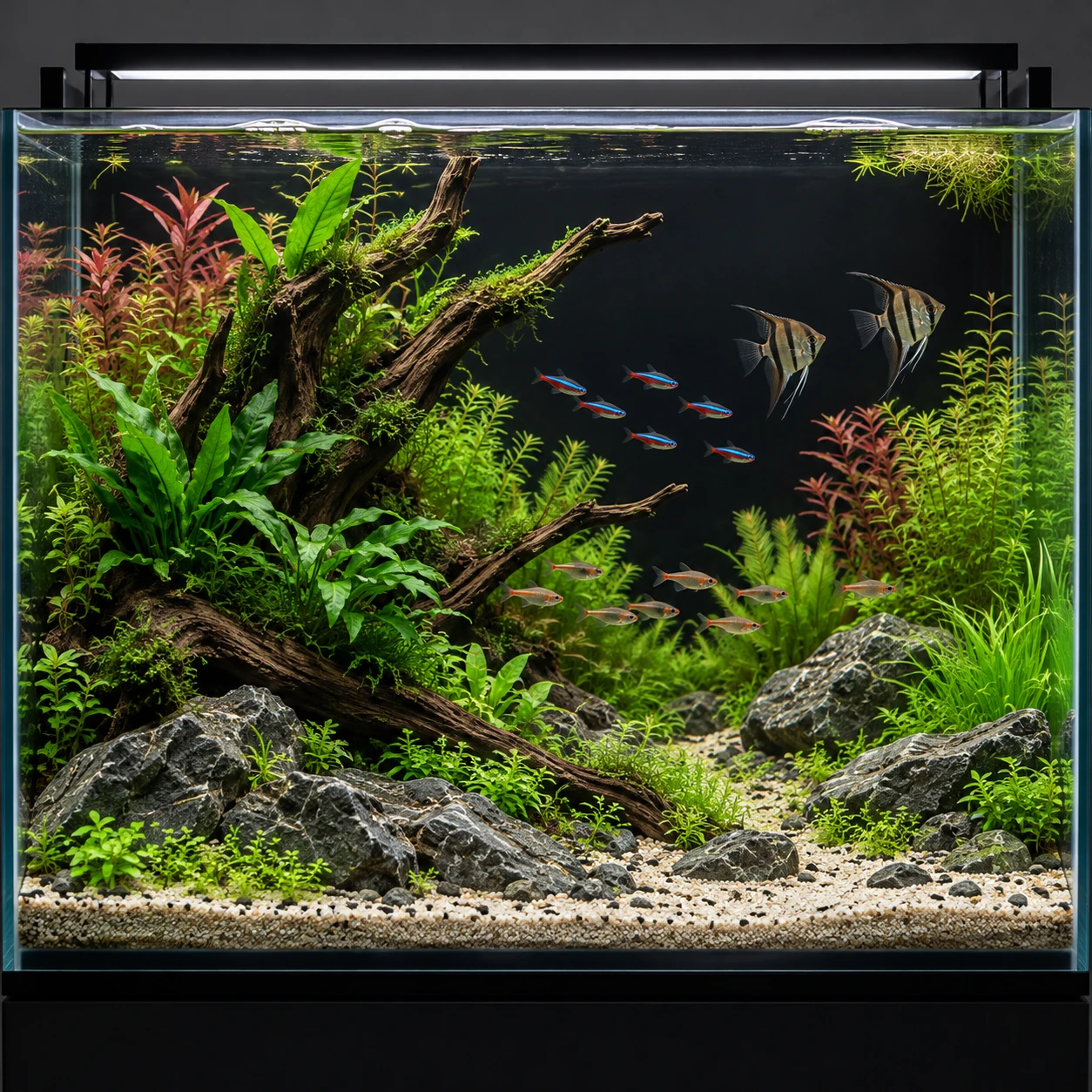
For freshwater planted aquariums, a range of 6,500K to 8,000K tends to render green plants with vivid saturation while keeping fish colors natural and warm. This range closely mimics midday tropical sunlight, which is why it works so well for nature aquarium styles.

For reef and saltwater tanks, most aquarists gravitate toward 10,000K to 14,000K or even higher. This blue-shifted spectrum makes corals fluoresce brilliantly and gives the tank that deep-ocean visual quality that reef keepers love. Actinic blue LEDs (around 420–460nm) are especially effective at triggering fluorescence in corals and certain fish.

RGB and full-spectrum LEDs give you the best of both worlds. With these fixtures, you can blend color channels to dial in exactly the look you want — boosting reds to make betta fish more vivid, or increasing blue to deepen the mood of a minimalist aquascape. If you're serious about aesthetics, full-spectrum LED control is worth the investment.

Matching Light Intensity to Tank Depth and Size

Light intensity needs to match your tank's depth — too little and the substrate looks murky; too much and you'll bleach delicate plants or stress fish. A general starting point is to consider how far light needs to travel before it reaches the bottom of the aquarium.

Shallow tanks (under 12 inches deep) can look stunning with moderate-intensity LEDs because the light reaches the substrate with minimal diffusion. Deeper tanks — anything over 20 inches — require higher-output fixtures or you'll end up with a beautifully lit upper third and a dim, unimpressive bottom.

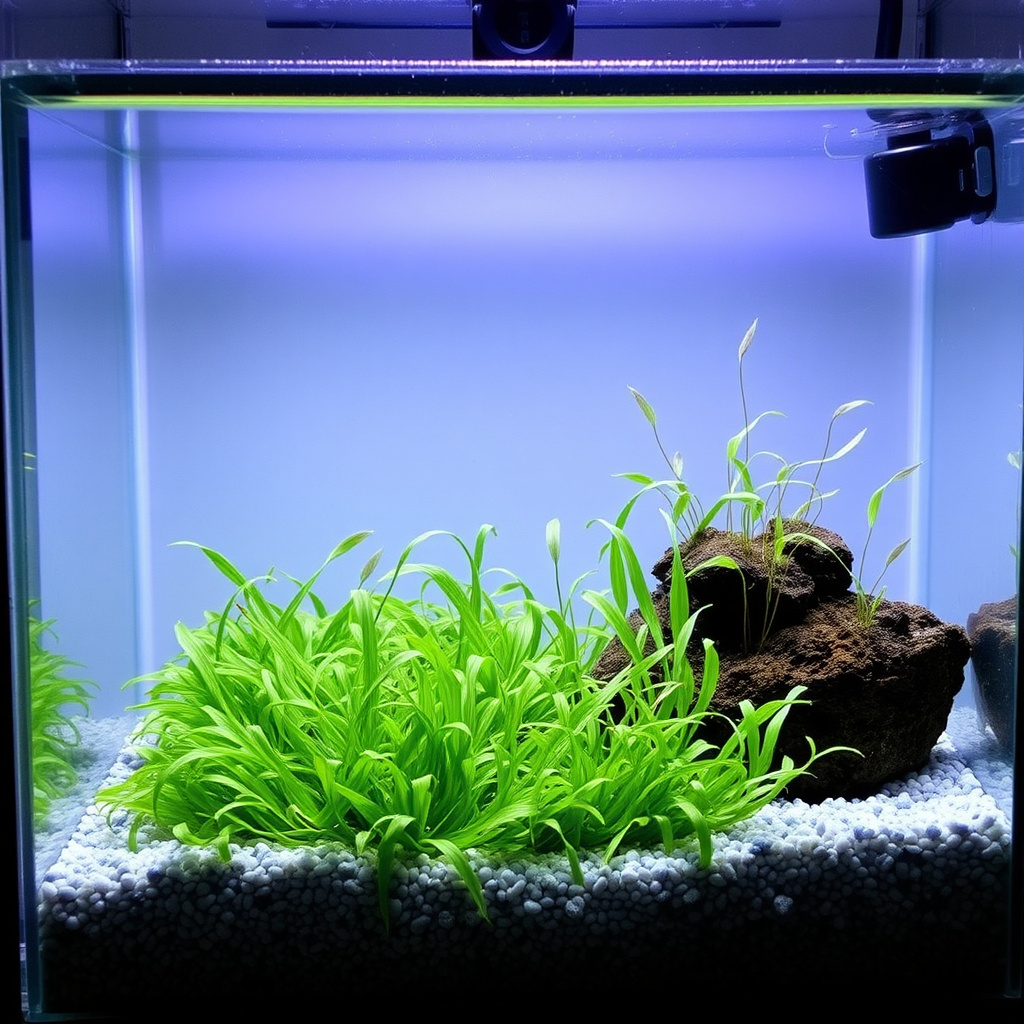
For aquascapes where the foreground carpet plants or decorative substrate are a key visual element, light penetration is critical. If the bottom of your 24-inch tank looks shadowy, the entire composition loses depth and dimension. In those cases, consider supplementing a primary overhead fixture with a secondary light positioned to angle into the lower portion of the tank.

Wider tanks present their own challenge — a single centrally placed fixture often leaves the edges dim and visually flat. Two smaller LED bars spaced across the width typically produce more even, aesthetically pleasing coverage than one large central unit.

Setting a Lighting Schedule That Creates Natural Beauty

A well-designed lighting schedule — or photoperiod — does more than support plant growth. It creates visual rhythm throughout the day that makes the tank feel alive rather than static. Most aquariums benefit from 8 to 10 hours of light per day, but how you structure those hours matters as much as the total duration.

Consider breaking your photoperiod into phases rather than a simple on/off cycle. A gradual ramp-up in the morning mimics sunrise, which triggers natural fish behavior — you'll notice more active swimming, feeding postures, and color display during these transitional periods. The same applies at the end of the day: a slow fade toward darkness creates a cinematic quality that's genuinely beautiful to watch.

Many LED controllers allow you to program midday intensity peaks, where brightness climbs to its maximum for a few hours before softening again in the afternoon. This simulates the arc of natural sunlight and creates a dynamic visual experience rather than a flat, constant brightness. For planted aquascapes, this also tends to produce better growth patterns in live plants.

One practical note: consistency matters. Running your lights on the same schedule every day using a timer — even a basic one — produces better visual results than manually switching lights on and off at irregular times. Fish and plants respond to predictable light cycles, and that response shows in how the tank looks.

Using Dimming and Color Modes to Set the Mood

Dimming and color mode controls are where LED lighting becomes genuinely creative. These features let you shift the entire mood of a tank depending on the time of day, the occasion, or simply what you want the aquascape to express.

A low-intensity, blue-shifted evening mode can make a reef tank look like a moonlit ocean floor — ethereal and calm. The same tank at noon with full-spectrum brightness looks energetic and tropical. These aren't just different brightness levels; they're fundamentally different visual experiences created by the same fixture.

Sunrise and sunset simulation modes, available on most programmable LED systems, are worth enabling even if you never touch any other settings. The gradual color shift from warm orange-pink tones at dawn to full white daylight is visually striking and adds a theatrical quality to the tank that static lighting simply can't replicate.

For aquarists who display their tanks in living spaces, a moonlight mode — typically a very dim blue or white at around 5–10% intensity — allows the tank to remain a visual focal point in the evening without disrupting the fish's sleep cycle. It's a small detail that makes a meaningful difference in how the aquarium integrates with the room around it.

Positioning LED Lights for Maximum Aesthetic Impact

Where you place your LED lights shapes the entire visual character of the aquarium. Overhead placement is standard, but it's not the only option — and for certain aquascape styles, it's not even the best one.

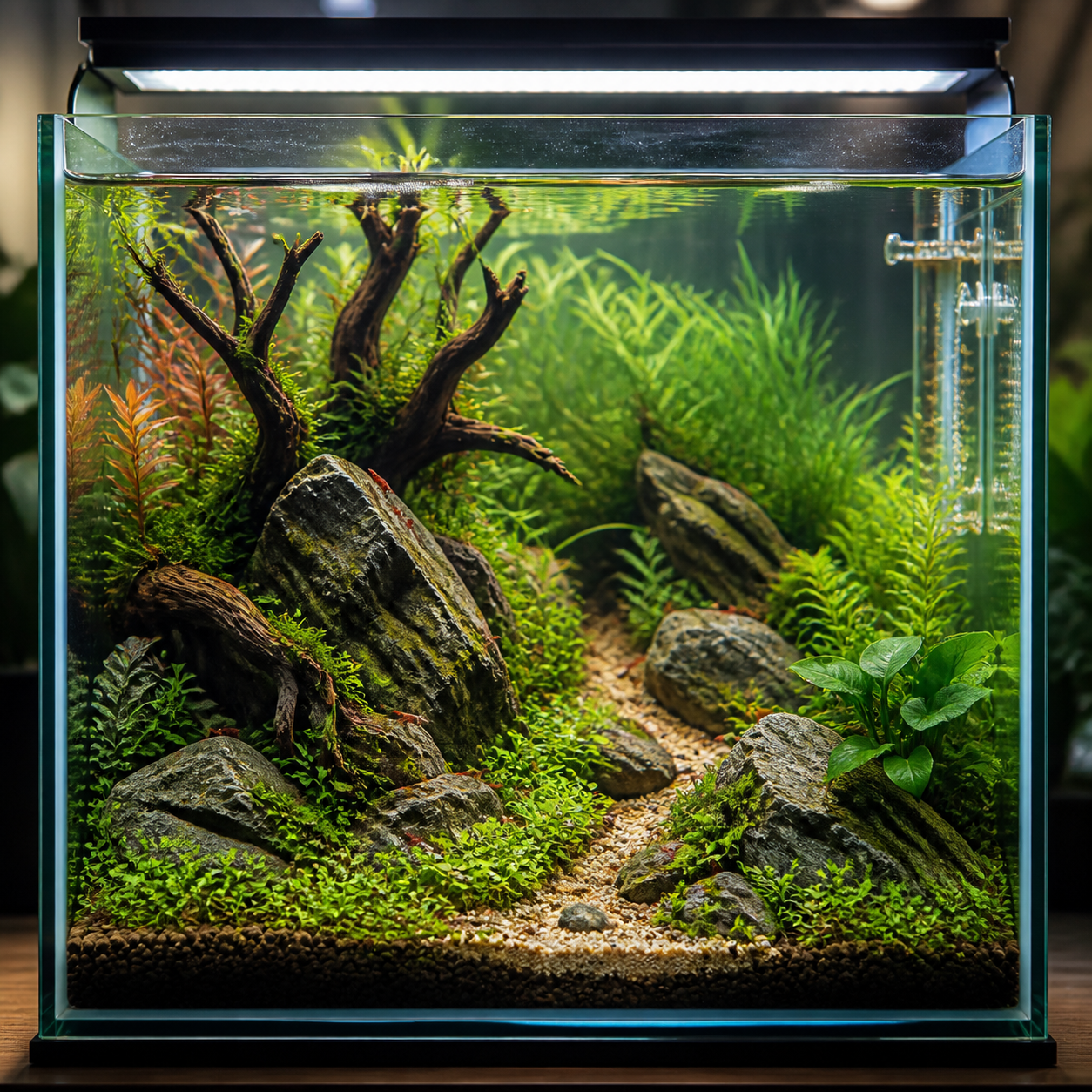
Overhead lighting creates natural-looking downward shadows that give rocks, driftwood, and substrate texture and dimensionality. This works beautifully for nature aquarium styles and planted tanks where the goal is to simulate a forest floor or riverbed. Position the light slightly toward the front of the tank rather than centered — this creates a subtle shadow gradient toward the back that adds perceived depth.

Side-mounted or background LEDs open up completely different possibilities. A strip of blue LEDs along the back panel creates a glowing backdrop that makes fish silhouettes dramatic and striking. This technique works especially well for dark-substrate minimalist aquascapes where contrast is the primary design tool.

For tanks with tall hardscape elements — large rocks, branching driftwood, or tall stem plants — consider whether your current positioning creates interesting shadows or just flat illumination. Angled lighting that catches the edges of hardscape elements from the side produces a three-dimensional quality that overhead-only setups rarely achieve.

Balancing Beauty with Algae Control and Plant Health

The most visually appealing lighting setup can quickly become a problem if it triggers algae overgrowth — the number one enemy of a clean, beautiful aquascape. The key is understanding that algae and live plants compete for the same light, and the balance between them is largely within your control.

Algae problems in aquariums are almost always the result of too much light for too long, combined with excess nutrients. Reducing your photoperiod to 8 hours (or even 6 for tanks without live plants) and keeping intensity at the minimum needed for your visual goals is usually enough to keep algae manageable without sacrificing aesthetics.

For planted aquariums, live plants are actually your best algae defense — they consume the same nutrients algae needs. A densely planted tank can handle more light than a sparsely decorated one because the plants outcompete algae for resources. This means that investing in a well-planted aquascape doesn't just look better; it also lets you run more impressive lighting without the green film problem.

If you notice algae beginning to appear on the glass or hardscape, the first adjustment should be duration rather than spectrum. Cut 30–60 minutes from your photoperiod before changing any color settings. Spectrum changes affect aesthetics dramatically; duration changes affect algae growth with minimal visual impact. According to general aquatic biology principles referenced by resources like Wikipedia's overview of algae, light duration is one of the primary drivers of algal bloom conditions in enclosed water systems.

Frequently Asked Questions

What color LED light makes fish look most vibrant?

A full-spectrum LED with boosted red and blue channels tends to make fish colors most vivid. For red or orange fish, a warmer spectrum around 6,500K enhances their natural pigmentation. For blue or purple fish, a cooler spectrum with actinic blue elements brings out fluorescence that's otherwise invisible under standard lighting.

How many hours a day should aquarium LED lights be on?

Most aquariums do well with 8 to 10 hours of light per day. Tanks with live plants can go up to 10 hours, especially with a dimming ramp at each end. Tanks without plants should stay closer to 6 to 8 hours to minimize algae risk while still enjoying the visual benefits of a well-lit display.

Can LED lights promote live plant growth in a freshwater tank?

Yes — full-spectrum LEDs that include wavelengths in the red (around 660nm) and blue (around 450nm) ranges support photosynthesis effectively. Many planted aquarium keepers achieve excellent growth results with quality LED fixtures, sometimes comparable to or better than traditional T5 fluorescent setups, particularly when using fixtures designed specifically for planted tanks.

Do LED lights cause algae problems in aquariums?

LEDs themselves don't cause algae — excess light duration and nutrients do. Because LEDs are often brighter and more efficient than older bulbs, it's easy to over-light a tank when switching from fluorescent. If you're upgrading to LED, start with a shorter photoperiod than you used before and adjust upward gradually while monitoring for algae.

What is the best LED light color for a reef or saltwater tank?

Reef tanks typically look best under high-Kelvin lighting in the 10,000K to 14,000K range, often blended with actinic blue. This spectrum triggers coral fluorescence, gives the water a deep blue quality, and accurately represents the light conditions of shallow tropical reefs. Many reef aquarists also use UV LEDs sparingly to enhance the glow of certain coral species.

{{HOMEPAGE_LINKS}}