Step-by-Step Guide to Setting Up a Planted Tank

A planted tank brings living greenery and natural structure into an aquarium, but healthy growth starts with a sound setup. Choose equipment and plants that suit one another, build the layout before filling the tank, and give the biological filter time to mature before adding fish.
Choose Your Tank and Plan the Layout
Choose an aquarium that fits your available space and plan a simple layout around plants suited to your light and maintenance level. A larger tank usually gives water parameters more room to change gradually, while a small tank needs careful, consistent care.
Before buying equipment, measure the stand and confirm that it can safely support the filled aquarium. Consider access to a power outlet, room for maintenance, and whether the tank will receive direct sunlight. Sunlight can encourage unwanted algae and is difficult to control.
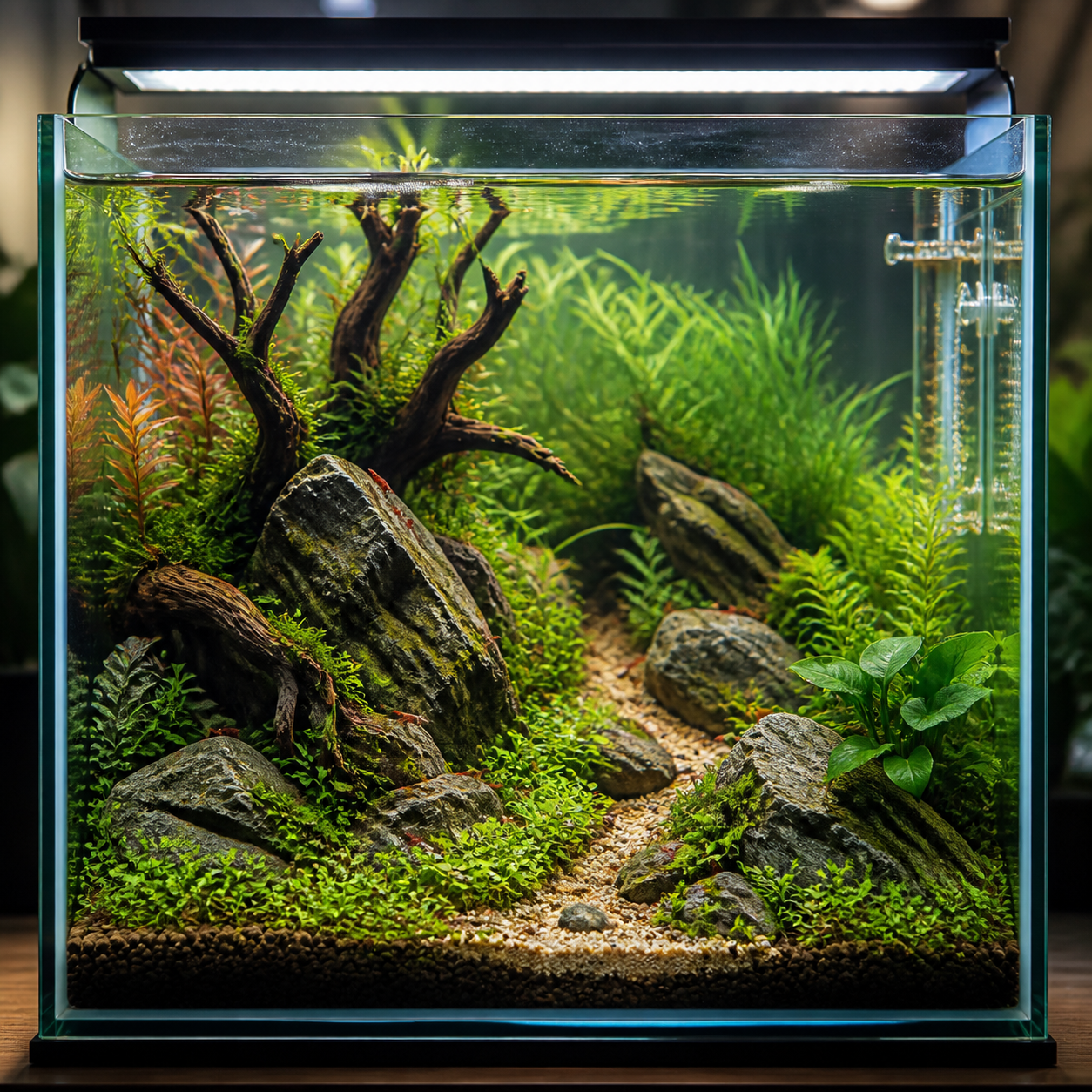
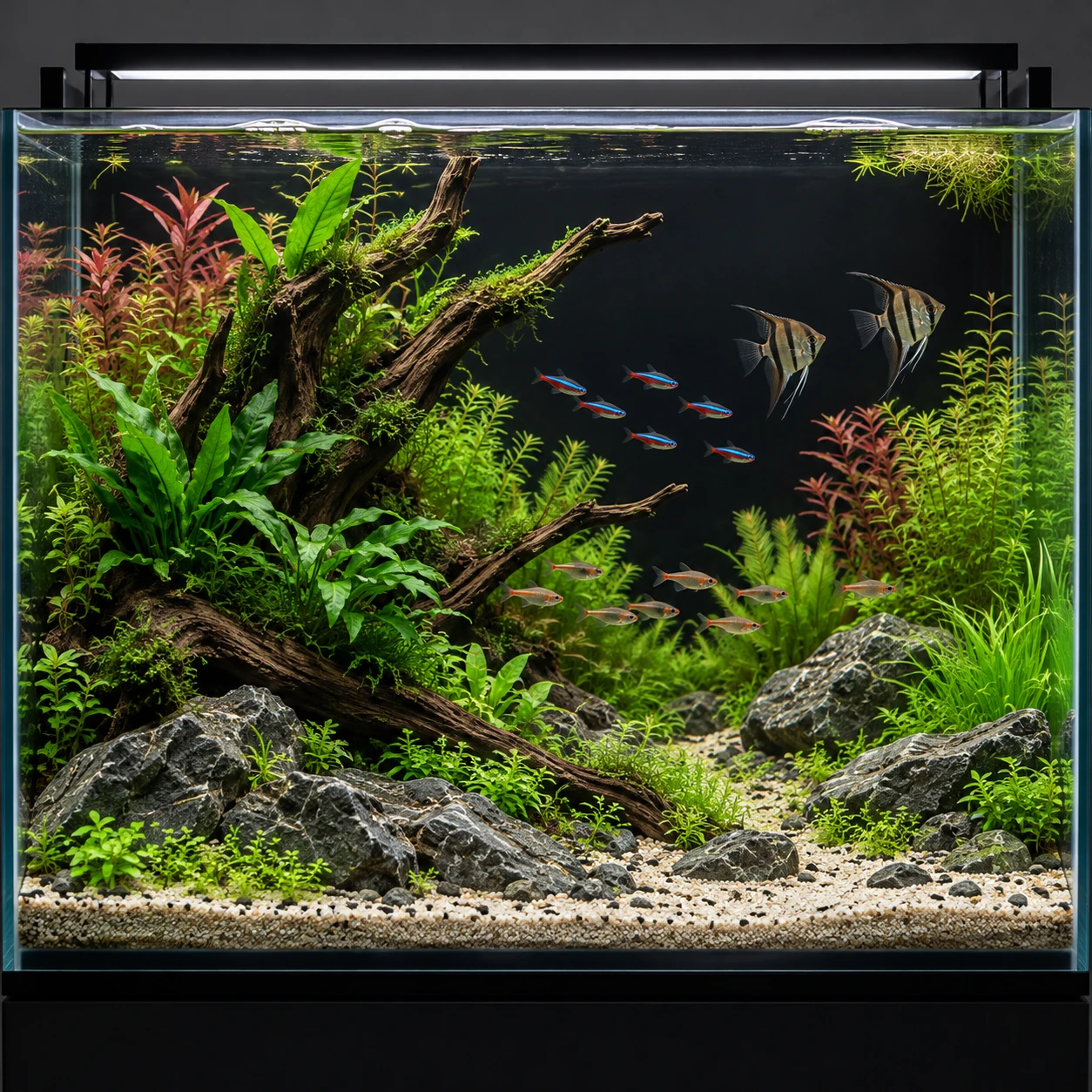
Sketch a basic arrangement: keep shorter plants toward the front, medium plants in the middle, and taller species near the back or sides. Leave open space for viewing and maintenance. Rocks and driftwood can create a focal point, but avoid crowding the whole tank.
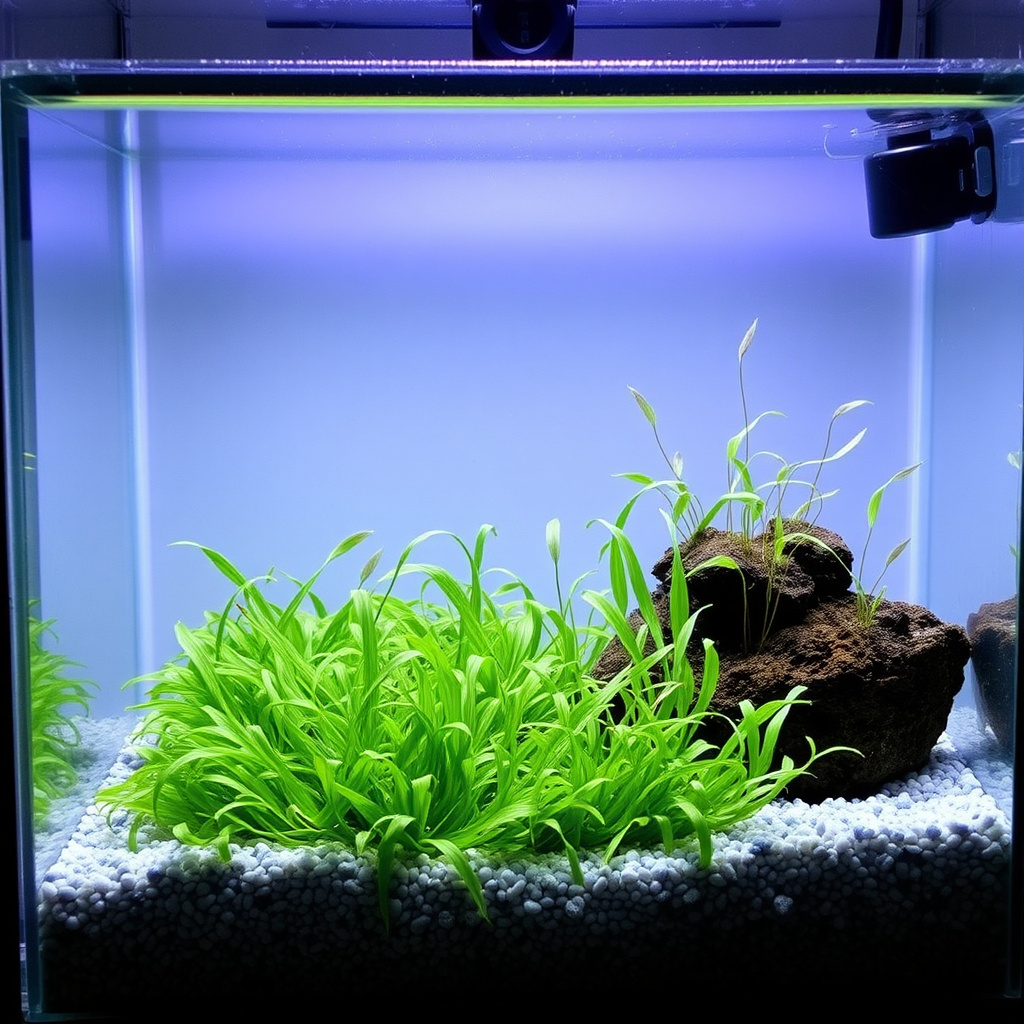
Match plant choices to the setup rather than expecting every species to thrive under the same conditions. Beginner-friendly options such as Java fern, Anubias, and many mosses can attach to hardscape, while stem plants and carpeting plants may need stronger light or added carbon dioxide (CO₂). Check each plant’s light and placement needs before purchase.
Gather Equipment and Prepare the Tank
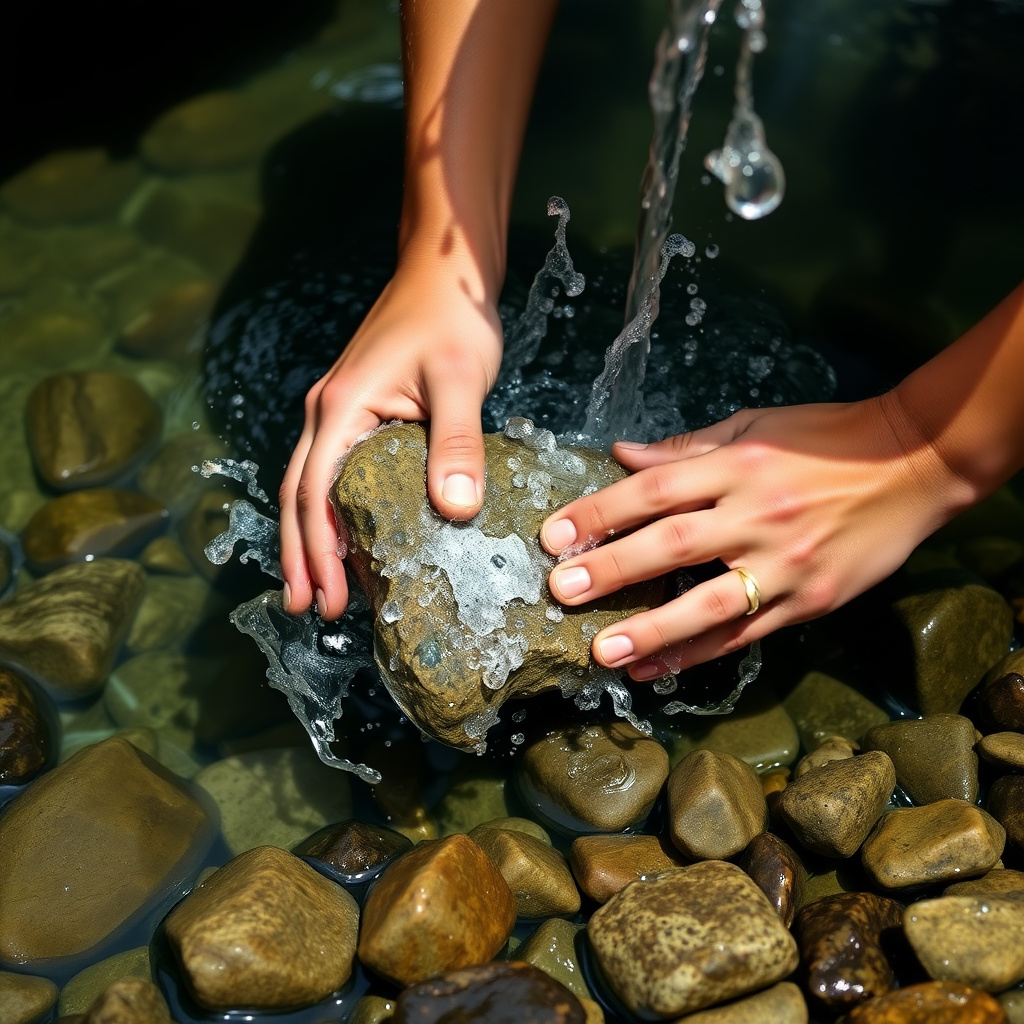
Prepare the aquarium with a suitable filter, aquarium lighting, substrate, water conditioner, and basic planting tools before adding plants or water. Rinse new equipment and the empty tank as directed, and never use soap or household cleaners.
A practical starter list includes:
- Aquarium and secure stand: Choose a size and shape that suit the intended layout.
- Filter: Select one that provides appropriate circulation without creating a current that uproots delicate plants.
- Light with a timer: Use a fixture designed for aquarium plants and a timer to keep the daily schedule consistent.
- Substrate and hardscape: Buy aquarium-safe material; avoid rocks or décor with sharp edges or uncertain coatings.
- Water conditioner and test kit: Conditioner treats tap water for aquarium use, while tests help track water parameters and cycling.
- Planting tools: Long tweezers make placement easier, and scissors help trim damaged leaves or roots.
Place the aquarium on a level, stable surface before filling it; moving a filled tank can damage the glass or seams. Check that the filter can be accessed for cleaning and that the light covers the planted area. Stronger light can support more demanding plants, but it can also encourage algae if nutrients, plant growth, and maintenance are out of balance.
Add Substrate and Arrange the Hardscape
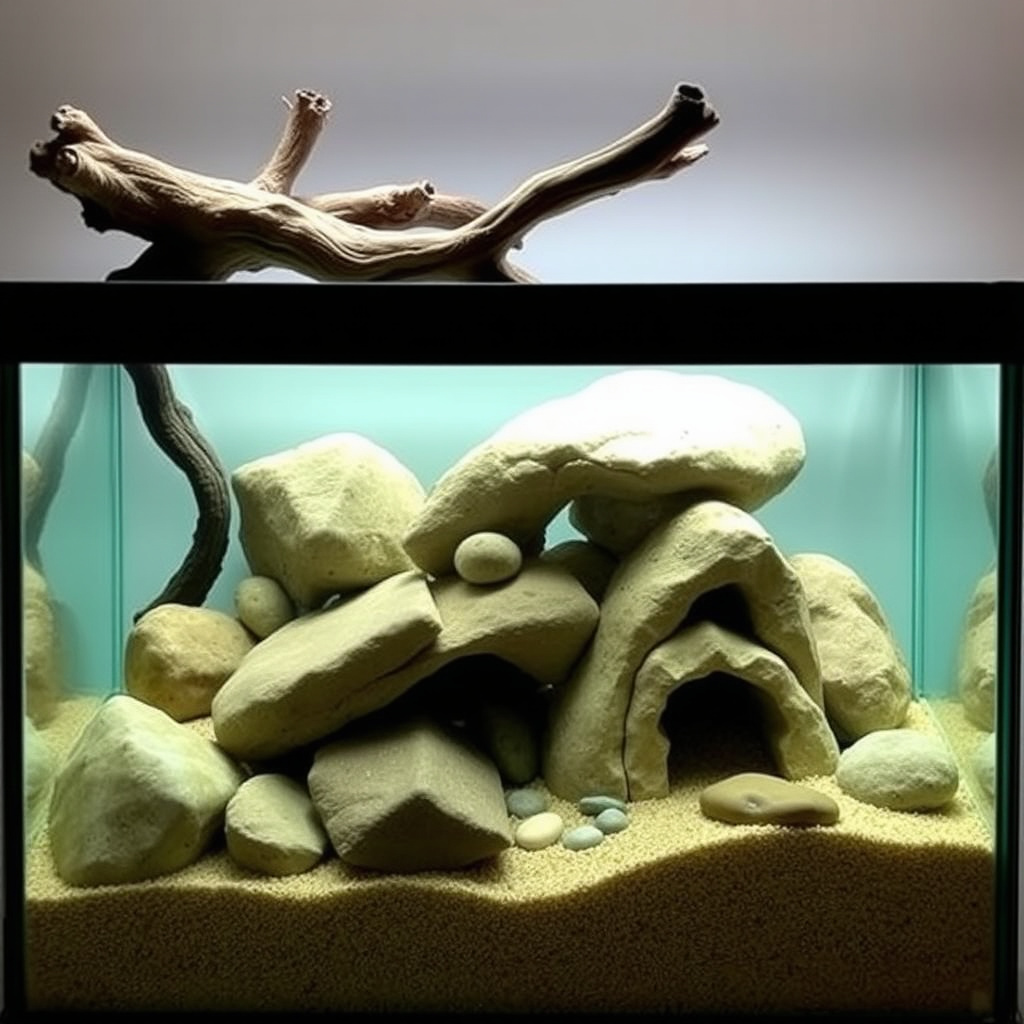
Add a suitable aquarium substrate, then position stable rocks and driftwood before planting. This order lets you test the composition and secure the hardscape without disturbing new roots later.
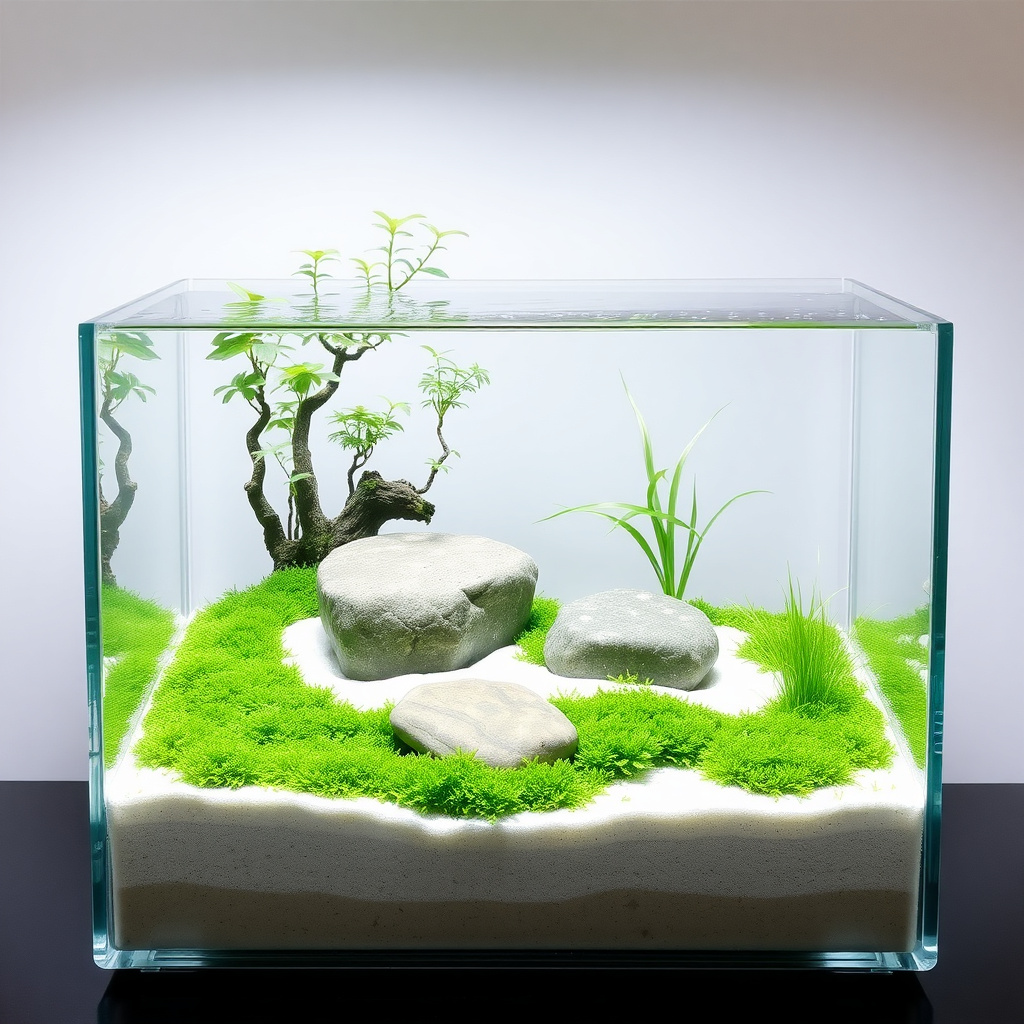
Substrate choice depends on the plants you want to grow. Nutrient-rich planted substrates can supply nutrients to rooted plants, though some may release nutrients into the water at first. Inert sand or gravel is easier to manage but may require root tabs or liquid fertilizer. A layered slope, higher at the back and lower at the front, adds depth and helps keep the foreground visible.
Set rocks and driftwood directly on a firm base so they cannot shift under the weight of substrate or during maintenance. If a piece could topple, reposition it before filling. Use aquarium-safe materials and leave gaps where fish could become trapped. Driftwood may float initially, so soak it beforehand or secure it safely; it can also tint water as tannins leach out.
Keep the design practical. Leave space around the filter intake and heater, if used, and make sure you can reach the glass and substrate. A beautiful layout becomes frustrating if routine pruning or cleaning requires dismantling it.
Plant and Fill the Aquarium
Plant species according to their growth habit, then fill the aquarium slowly with conditioned water to keep the substrate and layout in place. Trim damaged portions and remove pots or packing material before planting.
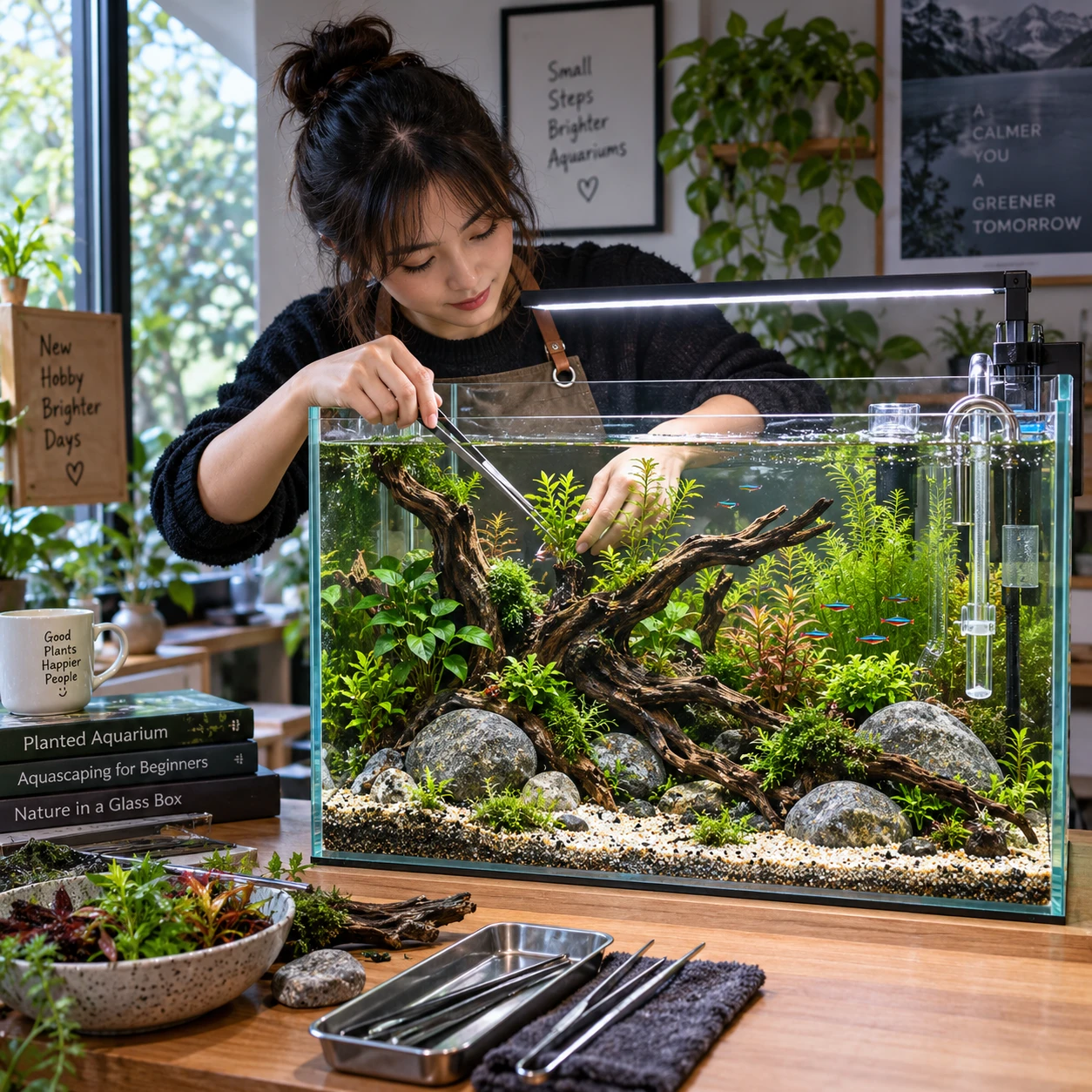
For rooted plants, gently separate crowded stems and place roots into the substrate with tweezers; avoid burying the crown, where leaves meet roots. Rhizome plants such as Anubias and Java fern should be attached to rock or driftwood rather than buried, since covering the rhizome can cause it to rot. Moss can be tied or secured to hardscape until it attaches.
To fill the tank without making a cloud of substrate, place a clean dish or plastic bag on the bottom and pour water onto it gently. Treat tap water with a water conditioner according to its label. If the water becomes cloudy, let the filter run and avoid stirring the substrate; fine particles often settle or get caught in the filter.
After filling, check for leaks and confirm that the water level allows the filter to operate correctly. Remove any leaves that were crushed during planting. Resist the urge to rearrange everything repeatedly: new plants need time to settle and develop roots.
Start the Equipment and Cycle the Tank
Run the filter continuously and cycle the tank before adding fish, using water tests to confirm that it can process ammonia. Cycling establishes beneficial bacteria that convert toxic ammonia into nitrite and then less harmful nitrate.
Set the aquarium light on a timer, starting with about six hours a day while plants adjust. Increase the photoperiod gradually only if plant growth calls for it and algae remains controlled. The right duration depends on the light’s intensity, plant species, and nutrient availability; longer lighting is not automatically better.
During a fishless cycle, provide a controlled ammonia source intended for aquarium cycling and follow a reliable testing routine. Test ammonia, nitrite, and nitrate, and follow the source’s directions rather than adding livestock to speed the process. A tank is ready for fish when ammonia and nitrite can be processed to zero after an appropriate ammonia input, as confirmed by testing. The time required varies, so a fixed number of days is not a dependable test.
Plants can help use available nutrients, but they do not replace a mature biological filter. Keep the filter running, avoid replacing all filter media at once, and use conditioned water for water changes. Add livestock gradually after cycling, then monitor water parameters as the biological load increases.
Maintain the New Planted Tank
Maintain a new planted tank with regular observation, water changes, and measured adjustments to light and nutrients. During the first weeks, stability matters more than chasing rapid growth or correcting every minor change at once.
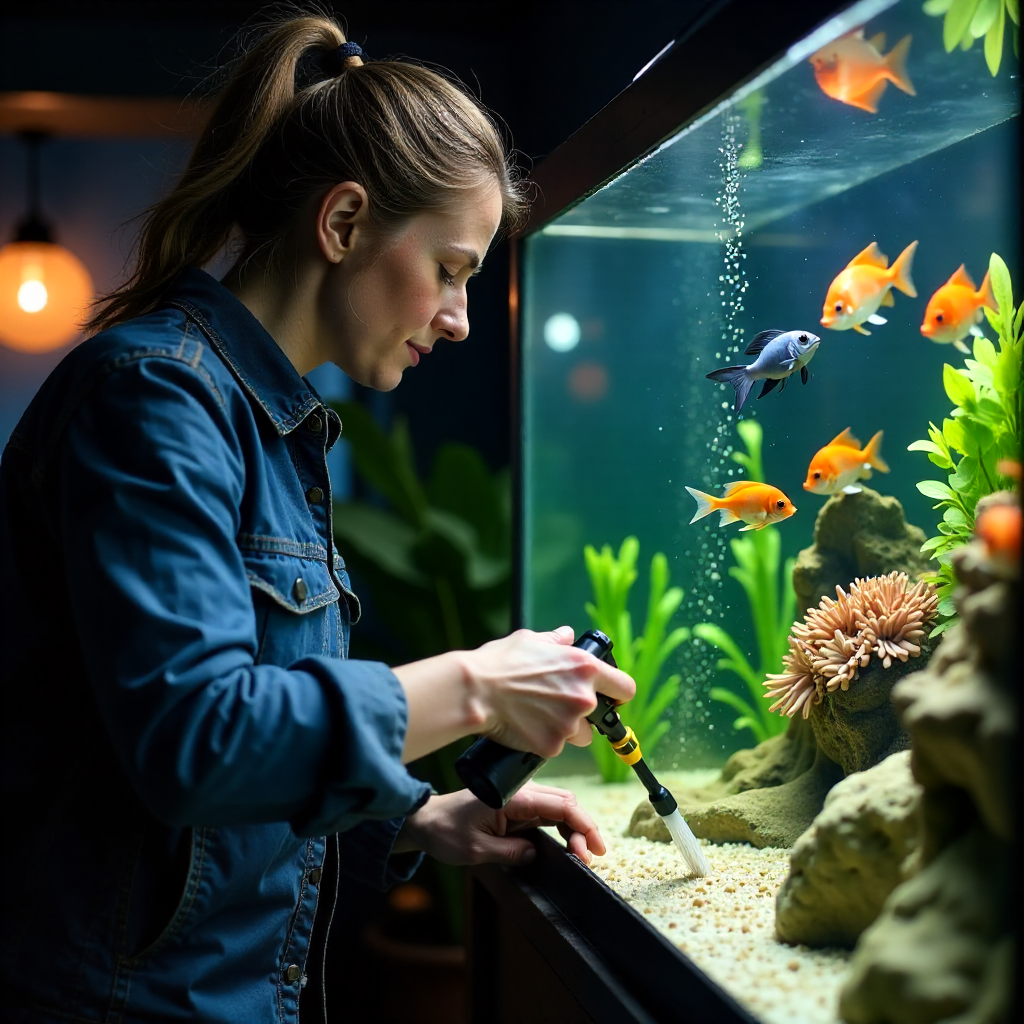
Test water parameters regularly, especially ammonia and nitrite during cycling and after livestock is introduced. Change a portion of the water on a consistent schedule, adjusting the amount and frequency to test results, plant condition, and stocking. Use conditioner for replacement tap water as directed, and avoid large, sudden changes unless a water-quality problem requires prompt action.
Remove melting or decaying leaves, trim overgrown stems, and replant healthy cuttings where appropriate. Some plants lose older leaves as they adapt to a new aquarium; remove damaged growth while watching for whether new leaves appear. If algae develops, check the light schedule, nutrient inputs, and plant health before reaching for an algaecide. Algae can signal an imbalance, and treating the symptom alone may not solve it.
Keep a simple log of lighting hours, water tests, water changes, and fertilizer dosing. Change one variable at a time and give the tank time to respond. That makes it easier to identify whether a problem comes from excess light, unstable water, poor circulation, or a plant’s specific needs.
Planted Tank Setup FAQs
Most planted tanks can be set up with straightforward equipment, but lighting, CO₂, and cycling time depend on the plants and biological conditions. Use plant growth and test results to guide decisions rather than relying on a single rule for every aquarium.
Can you set up a planted tank without CO₂?
Yes. Many aquatic plants, including Anubias, Java fern, and mosses, can grow without added CO₂, especially under moderate light. Growth may be slower, and some carpeting or demanding stem plants may struggle without injected CO₂.
How long should a planted tank cycle before adding fish?
There is no reliable fixed duration. Cycle the tank until tests show that ammonia and nitrite are being processed to zero after an appropriate ammonia input. Test results, not the calendar, indicate readiness.
How much light do aquarium plants need?
Light needs vary by species and fixture. Start with about six hours daily, then adjust gradually while watching plant growth and algae. High-intensity lighting may require closer control of nutrients and CO₂.
When should you add fish to a new planted tank?
Add fish only after the tank is cycled and water parameters are suitable for the chosen species. Introduce them gradually, acclimate them carefully, and keep testing the water as the filter adjusts to the new load.